Spending long hours on European highways can sometimes leave international truck drivers facing a persistent struggle: few decent restaurant choices, steep meal prices, and a sea of ultra-processed snacks with very little nutritional value. When you take a step back and recognize that your body works a lot like a high-performance diesel engine, it becomes clear that low-quality fuel results in unexpected “breakdowns.” Many drivers find that relying mostly on sugary, heavy roadside foods results in noticeable energy crashes, sometimes at the worst possible moments on the road. Actually, learning how to manage your nutrition inside the cab is a realistic route to both freedom and safety.
Introduction: The roadside food challenge
Staying healthy and alert along Europe’s main transport routes is no small feat. Anyone who has stopped at motorway service stations has seen just how overwhelming the shelves of ultra-processed snacks can be. Snacks designed for shelf life, not for the demands of a lengthy drive, quickly fill the shelves: they are loaded with sugars and refined carbs, which might seem convenient but certainly work against lasting energy and focus. These so-called “easy options” often lead to a range of physiological issues that catch up sooner rather than later.
If you start embracing in-cabin nutrition, even if just gradually, you sidestep many of those expensive and unhealthy roadside restaurant pitfalls. By organizing your cab’s food choices yourself, you boost self-sufficiency and maintain control over what you eat, offering your body the high-quality “fuel” it genuinely needs. Supermarkets like Lidl and Kaufland make it easier to do this with accessible, affordable options almost everywhere you go.
The danger of ‘food comas’ behind the wheel
Many drivers notice a troubling pattern after eating hearty, carbohydrate-heavy lunches picked up from gas stations: first comes a rapid rise in blood sugar, then the pancreas reacts by sending out a big wave of insulin, and suddenly, blood sugar levels drop sharply. This well-known “sugar crash” or reactive hypoglycaemia quickly leaves you feeling short on both focus and energy.
At the same time, your digestive system redirects more blood to help process that heavy meal. It’s not uncommon, then, to find yourself drowsy and less responsive within 30 to 45 minutes of eating, which puts safety at risk. Some typical outcomes include:
- Impaired concentration: Sluggish reaction times and fuzzy thinking often kick in.
- Microsleeps: Short, involuntary bursts of sleep that sneak up and can be extremely dangerous.
- Lethargy: Your brain’s alertness drops as certain neurons go quiet when blood sugar is high.
If you want to avoid these frustrating crashes, replacing processed fast foods with more stable energy sources is a practical step. It’s not about perfection, but rather learning how to sidestep predictable energy slumps.
Roadside grocery shopping
Choosing to stop at regular supermarkets such as Lidl or Kaufland instead of smaller convenience shops at gas stations can change your entire approach to eating while on the road. These supermarkets, well known among European drivers, offer basic groceries that can effortlessly fit into a balanced, affordable cabin diet.
Essential cabin pantry staples
Try to stock items that provide steady energy and can be stored or eaten easily. Here are some top picks:
- Raw nuts: Almonds and walnuts pack in healthy fats for energy.
- Canned legumes: Beans or lentils digest slowly, helping to keep you full longer.
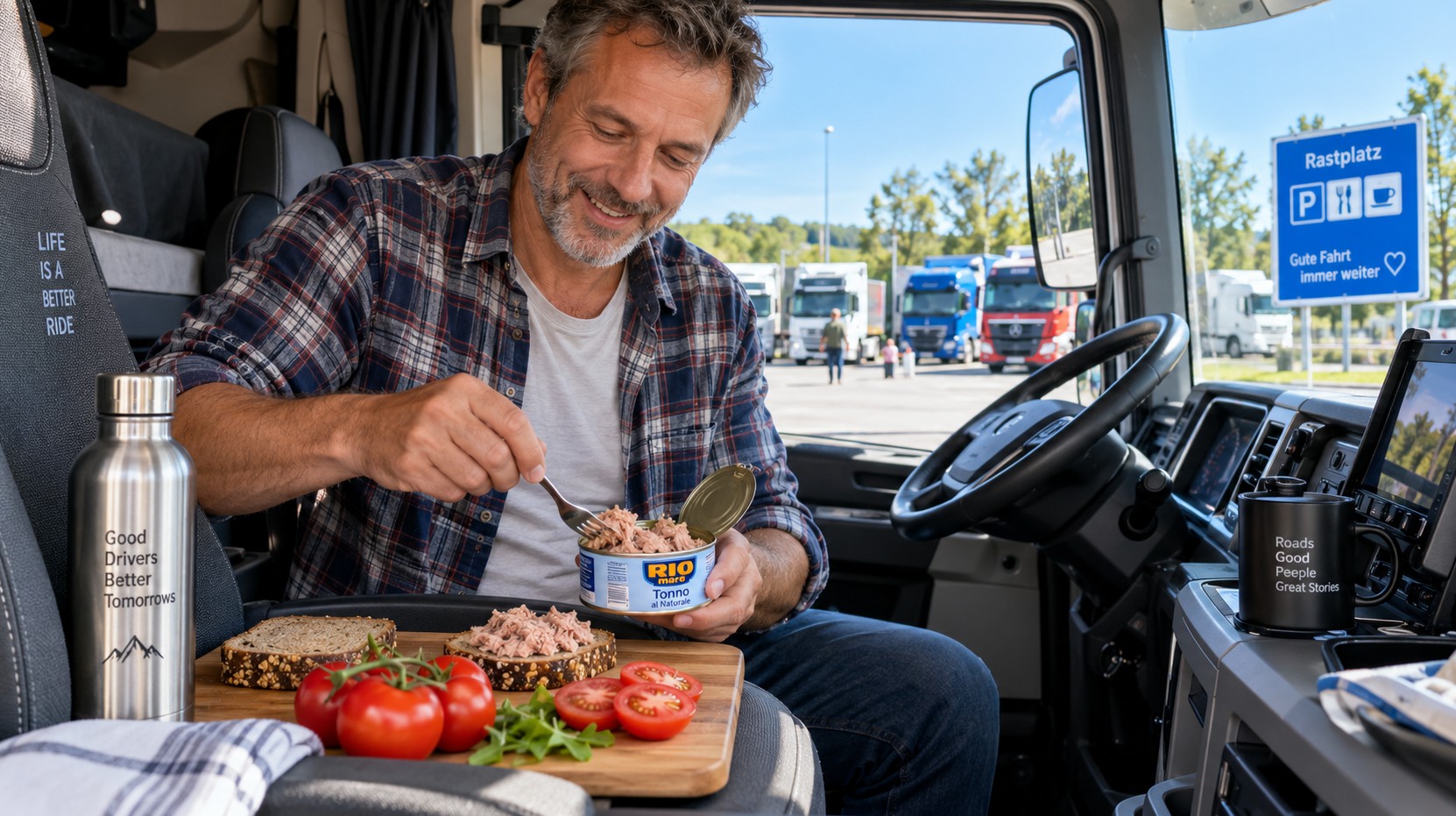
- Tinned tuna: A solid source of protein that requires no cooling.
- Hard cheeses: Excellent for protein and can last a while without spoiling.
- Whole-grain breads: These keep your energy stable without quick blood sugar spikes.
- Fresh apples: This tough fruit travels well and provides a natural dose of sugar.
| Food category | Recommended staples | Primary benefit |
|---|---|---|
| Shelf-stable protein | Tinned tuna, canned legumes | Helps prevent blood sugar spikes |
| Dairy protein | Hard cheeses, quark, Skyr | Supports a lasting sense of fullness |
| Complex carbohydrates | Whole-grain breads, oats | Provides energy over a longer period |
| Quick snacks | Raw nuts, fresh apples | Gives you nutrient-rich energy on the go |
The in-cabin kitchen: fridges and portable stoves
Setting up your cab with a few essential appliances truly improves both your diet and your budget. With a straightforward 12V/24V portable fridge and a butane camp stove, you transition from just getting by to having real independence in what and when you eat. This offers more control than many realize at first.
Maximising your cabin equipment
When you own a compact compressor fridge, you can easily store lower-glycaemic foods like crisp vegetables, lean cuts of ham or chicken, and even dairy that might otherwise spoil. That way, you aren’t as tied to processed foods. On top of that, a portable butane stove allows for simple, hot meals at a moment’s notice. Whether it is reheated stew from Kaufland or quick scrambled eggs, you decide the quality of your energy on the road. Taking over your nutrition gears you up for sharper focus and better thinking, especially when long hours start to blur together.
Hydration strategy without unscheduled stops
Drinking giant bottles of water all at once or depending on sugary energy drinks sounds convenient but often backfires, sending you searching for restrooms during precious drive time. The truth is, managing hydration is more about timing and quantity than about chugging fluids when you start to feel thirsty.
Mastering fluid intake on the road
A very effective, and often overlooked, approach is simply taking small, regular sips of water throughout your shift. Aim for roughly 30–50 ml every 20–30 minutes to maintain comfort. Here are some practical pointers for staying hydrated without needless stops:
- Use tachograph breaks to your advantage: Take on more water (about 150–300 ml) during your scheduled rest periods.
- Minimize sugary drinks: Sweet beverages tend to increase both urination and overall fatigue, so they aren’t a smart mainstay.
- Steady hydration is best: Regular micro-sips support steady alertness throughout your drive.
Roadmap to our in-cabin nutrition guides
To truly help you build smarter eating habits while on the road, upcoming guides will be specifically tailored to European truck drivers. These guides put day-to-day practicality first, because that is what you will use most.
Upcoming nutrition resources
- Smart grocery lists for European supermarkets (3.a)
- Healthy gas station snacking that avoids common energy crashes (3.b)
- Easy 10-minute cabin recipes you can make with a portable stove (3.c)
- Hydration rules that really work in real driving life (3.d)
- Managing heavy digestions and staying alert after lunch (3.e)
The Marco Polo Mobile guarantee: passed through the ‘cabin test’
If there’s one thing that stands out in our work, it’s that every single meal idea or grocery suggestion is tested inside an actual truck cabin for genuine usefulness. We know what it’s like to face limited space and budget restrictions, so we never recommend solutions that don’t fit real-world routines. The focus is always on simplicity, you don’t need to be a chef or spend extra. Everything goes through our own “Cabin Test,” making sure you can prepare these ideas with what you normally carry. Plus, we strictly avoid suggesting foods likely to cause sugar crashes, so you can count on our resources for both legal compliance and day-to-day job safety.
Frequently asked questions (FAQ)
Understanding driver fatigue and food storage
Why do I feel extremely sleepy around 30 to 45 minutes after eating a heavy highway service meal?
This familiar wave of drowsiness is caused by a quick surge of insulin following a meal rich in carbohydrates. The body rushes to manage the sugar spike, and when blood sugar drops, your brain doesn’t get the fuel it needs. Meanwhile, your digestive system claims extra resources, further reducing brain energy and leading to fatigue or microsleeps.
How can I keep fresh food from spoiling during a multi-day route across Europe?
For reliable freshness, a 12V/24V compressor fridge kept below 4°C is crucial. Dairy, cooked meats such as those from Lidl, and hard-boiled eggs will last much longer when stored properly. As for items like canned fish, these can be safely stored at room temperature until opened.
Smart snacking and hydration
What are the best healthy roadside snacks to keep in my glovebox for long driving stretches?
The best options are those with a low impact on blood sugar: for example, raw nuts, apples, and canned fish from Kaufland, which keep well and don’t require refrigeration. If you do have a fridge, hard-boiled eggs and dairy like cottage cheese work very well as well, they are satisfying snacks without hidden sugar surges.
How do I stay hydrated on the road without needing constant bathroom stops?
Adopting a frequent micro-sipping routine is key: take small sips (30–50 ml) at intervals of 20–30 minutes, then save larger gulps for official tachograph rest breaks. Steer clear of high-sugar and highly caffeinated drinks while actively driving, since they can cause dehydration or frequent restroom visits.
Join the connected driver community
By sharing hands-on advice, you help build a supportive network that actually benefits international long-haul drivers. Your personal experiences, like how you keep up with cabin nutrition, can be a valuable resource for others trying to improve their habits.
What’s your favorite meal to whip up while parked at a rest stop, or your go-to snack that you always keep within arm’s reach? Leave your favorite road recipe or tip for others to try in the comments section!
Important medical notice
MEDICAL DISCLAIMER: The insights and information provided in this article are solely for educational and informational purposes; they are not intended to substitute for professional medical advice, diagnosis, or treatment. If you have any medical questions or health goals, always consult your doctor or a qualified healthcare professional.
Managing your eating habits while working on the road is honestly just another aspect of being a conscientious operator. When you view your own health through the same lens as you would routine maintenance for a truck, you’re protecting both safety and long-term wellness.
By treating your in-cabin kitchen as another tool in your professional kit, you put yourself in a much stronger position to face challenging European routes, night or day. Plan ahead, invest in a few basics, and experience the confidence that comes from enjoying reliable energy for every journey.