

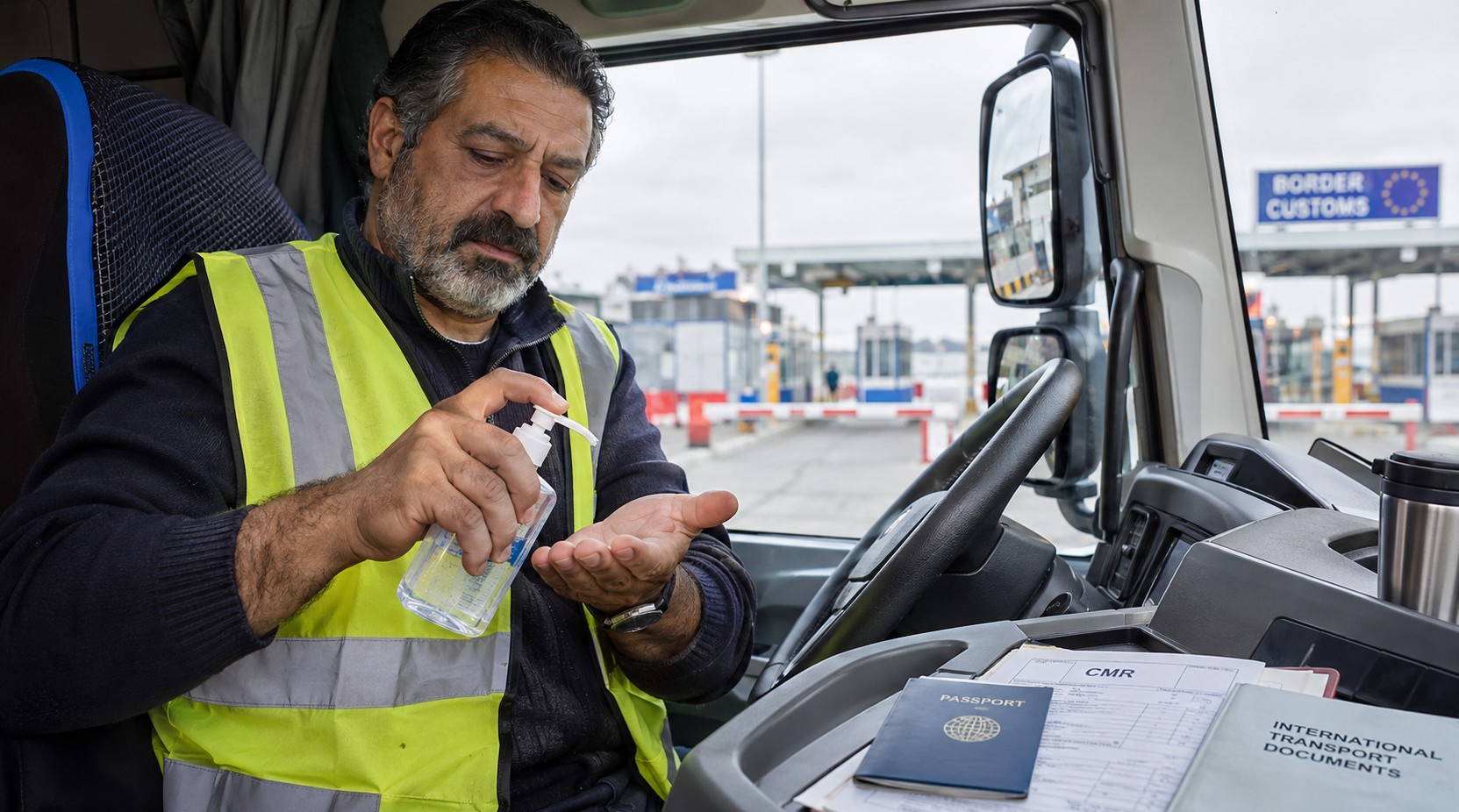
Many drivers know from experience that crossing three countries in two days is more than just exhausting. Actually, your immune system often pays a price. Encountering crowds at border controls, coping with unpredictable document checks, and trying to rest in an unfamiliar environment naturally set off stress responses that knock down your body’s natural defences. Fortunately, you don’t need expensive vitamin packs to tackle these risks.
By focusing on a few effective daily habits while in your cab, you can reliably protect your health and keep your immune system in good shape throughout your travels.
Why stress and changing water lower your defenses
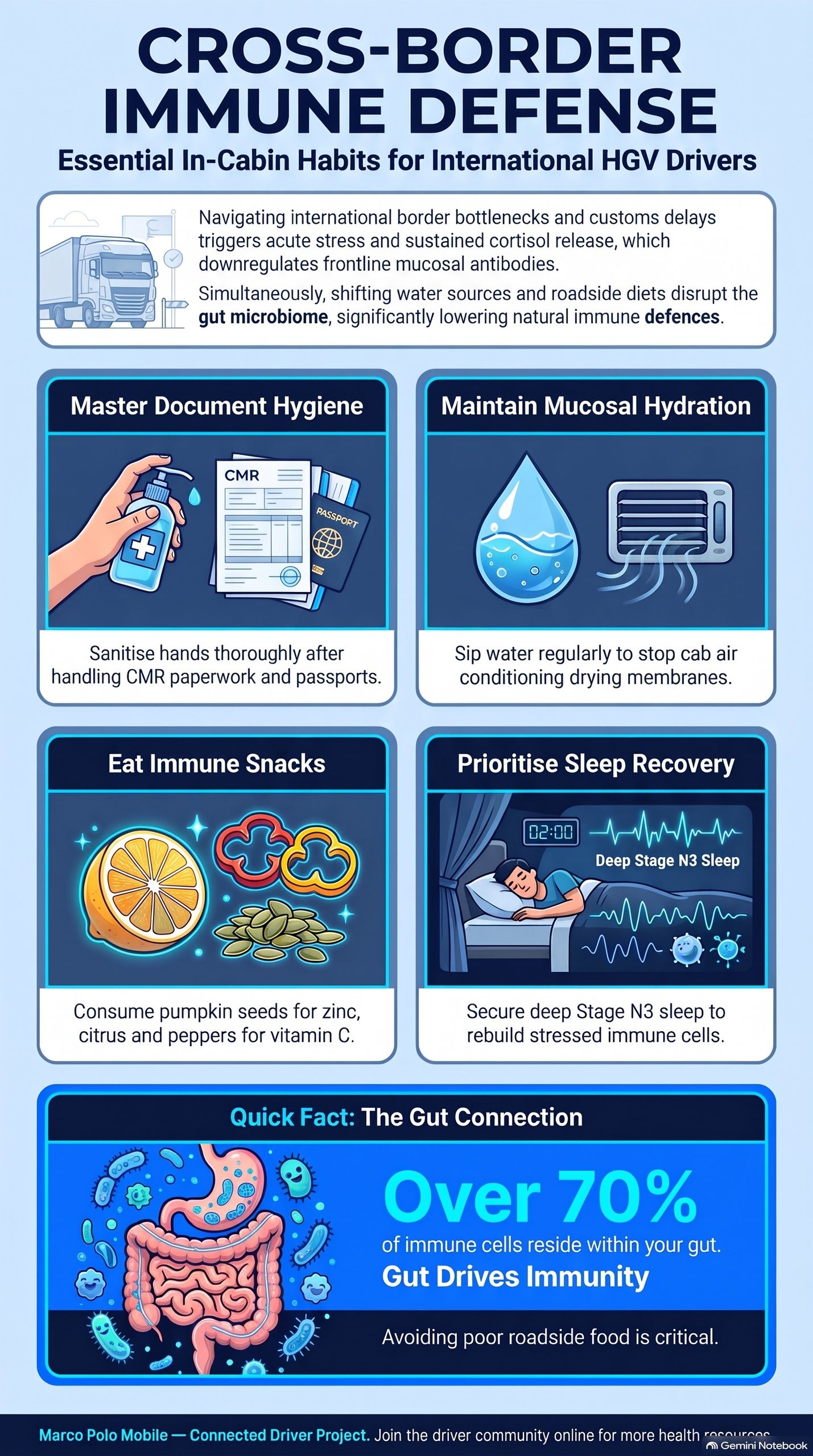
It’s not only the physical distance crossed that puts your health at risk, it’s also coping with sudden stress at customs. Acute stress leads your body to release cortisol, which in turn suppresses some of your frontline immune cells, especially those guarding your throat and gut. Customs procedures can seem designed to raise anyone’s stress levels, and this shortage of defenders makes you more open to whatever germs are lingering in communal spaces.
But, of course, stress isn’t the only factor. Switching between different roadside foods or drinking local water often unsettles your gut bacteria for a short period. Since a large portion of immune cells live in the gut, these changes can disrupt how your immune system responds. Generally, the big issue is poor hygiene rather than just swapping bottled water brands according to availability. Usually, mild stomach upsets are temporary unless contaminated food or fluids are involved.
Habit 1 ( The customs hand hygiene rule
Interacting with customs officials, passing along CMR documents, and spending time in shared toilets at the border means your hands pick up all sorts of germs. It might sound obvious, but one crucial step for staying well is cleaning your hands after each of these tasks. This simple habit is your frontline protection against bringing germs to your face or driving controls.
Choosing the right cleaning method
When should you use soap instead of sanitiser?
Whenever possible, use soap and running water at rest stops and wash for at least 20 seconds. Soap is highly effective for clearing away tough viruses like norovirus. If soap and water aren’t available, reach for an alcohol-based hand sanitiser (look for at least 60% alcohol content). By the way, always apply sanitiser when your truck is safely stopped, never while you’re driving. Keeping hand hygiene central in your routine has a clear impact on illness prevention.
Habit 2 ( Hydration for respiratory defense
Not everyone realizes this, but the air conditioning inside your cab slowly dries out your nose and throat. Once those membranes dry, they can’t do their normal job, catching airborne germs, nearly as well. That makes you a lot more exposed to anything circulating in the air.
Protecting your airways
How does drinking water stop viruses?
Sipping water frequently keeps those protective linings moist so they can trap dust and viruses before reaching your lungs. Honestly, there’s no need to overdo it, just drink small amounts throughout the day as you feel thirsty. This one simple adjustment is surprisingly effective at reducing the risk of respiratory infections during long-haul journeys.
Habit 3 ( Immune-boosting glovebox snacks
People often wonder if they need special pills, but it turns out that European supermarkets provide plenty of affordable and practical snacks to support immune health. Reliable choices from stores like Lidl or Kaufland include foods rich in zinc and vitamin C. No need for anything complicated, look for straightforward options that keep well during your journey and actually do your immune system some good.
Supermarket choices for the cab
Here are some easily stored snacks that really help your body’s line of defense:
- Pumpkin seeds: Contain plenty of zinc, stay fresh without a fridge, and are hassle-free.
- Citrus fruits: Think oranges or mandarins, both simple sources of vitamin C with a good shelf life outside a fridge.
- Bell peppers: These are rich in vitamin C and work well as a crunchy snack during breaks.
| Snack type | Key nutrient | Storage requirement | Immune benefit |
|---|---|---|---|
| Pumpkin seeds | Zinc | Cool, dry place | Supports normal immune cell function |
| Oranges | Vitamin C | Room temperature | Protects cells from oxidative stress |
| Bell peppers | Vitamin C | Cool shaded place | Boosts white blood cell activity |
Habit 4 ( Defending your deep sleep
Normally, it’s during Stage N3 deep sleep that your immune system does essential repair work and builds new defenses. Getting quality rest in your berth after a demanding border crossing is more important than most drivers realize. It’s a genuine opportunity to bring your stress hormones down, giving your body a chance to fire up T cells and fight off any lurking infections.
Improving berth rest
Think of sleep as your nightly pit stop; making it as restful as possible is worth the effort. Here are some practical steps for building a quieter, safer sleep space in your cab:
- Block out light as fully as you can, curtains or an eye mask make a clear difference.
- Use earplugs, especially when parked near busy checkpoints or loud traffic.
- Set the temperature slightly cool and find what’s most comfortable for you.
- Avoid caffeine drinks for at least six hours before your sleeping period, so your body can relax fully.
The Marco Polo mobile guarantee: Passed through the ‘cabin test’
Every recommendation here has been tried and tested within the actual conditions of a driver’s cab. That’s the essence of the Cabin Test, only tips that are realistic, affordable, and safe to use while stationary get included. You won’t ever see unnecessary gadgets or overpriced supplements here. All ideas fit the rules set by the European Union for driving and resting, and you’ll find nearly everything you need at regular service stations.
Frequently asked questions (FAQ)
Q1: Why do I often catch a cold right after completing a stressful multi-country route? Deadlines and long border lines can be very stressful and your body reacts by producing more cortisol. This drop in protective antibodies in your throat and nose makes it far too easy for any virus you meet to cause an infection.
Q2: Can changing the type of bottled water I drink in different countries affect my stomach? Switching brands of sealed bottled water is safe. Your stomach won’t react to different reputable waters, but beware of poorly cleaned containers or contaminated supplies, that’s where trouble starts.
Q3: What is the most important time to use hand sanitiser during a driving shift? Sanitise your hands straight after handling customs paperwork, touching anything shared, or returning from public toilets, especially before you eat or even touch your face.
Q4: Which cheap roadside snacks are best for boosting my immune system? Some of the best budget options include pumpkin seeds (for zinc) and also oranges or bell peppers (for vitamin C). These foods genuinely help your body stay strong, without expensive pills.
Join the connected driver community
What’s the best trick you’ve learned for staying healthy while crossing multiple borders in one week? Please leave your own driving tips in the comments, they genuinely help others in the community.
Important medical notice
Medical disclaimer: All information in this article is intended for education and information only. It is not meant as medical advice or as a substitute for a doctor’s opinion, diagnosis, or treatment plan. Always speak with your physician or a qualified healthcare professional about any health questions you have.
Driving complex routes across Europe certainly takes more than road knowledge, it takes deliberate steps to look after your body. Understanding how the pressures of international journeys affect you will help you make smart choices without missing a beat at work.
Simple, realistic changes like careful hand washing, steady hydration, and getting better sleep create genuine protection against illnesses on the road. If you put these practical routines to use, you are much more likely to finish your next journey feeling healthy, and ready for whatever comes next.