

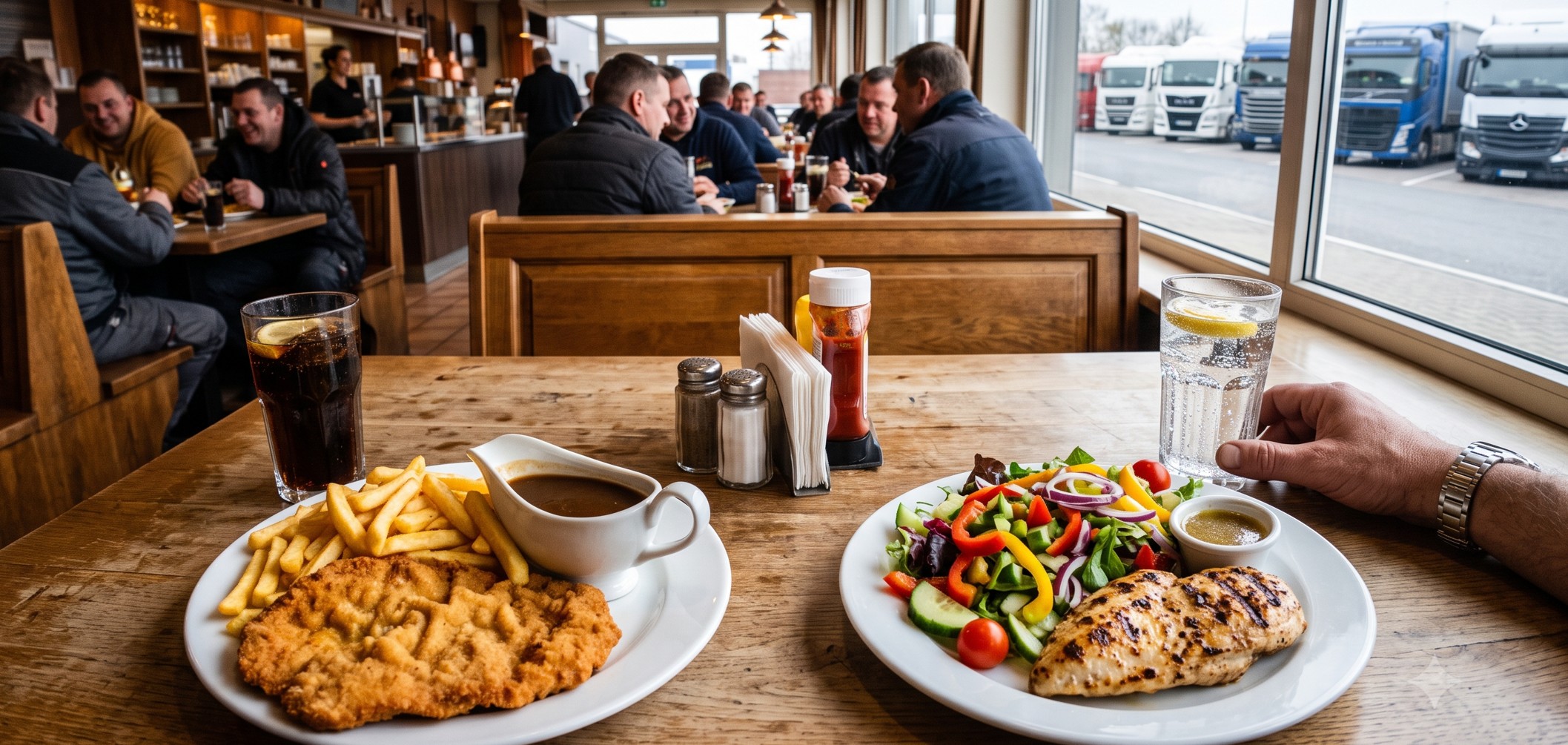
Your food choices at truck stops directly affect your energy levels, alertness behind the wheel, and long-term health. After 8 hours of driving across Germany or France, grabbing whatever’s fastest feels like the only option — but spending 30 seconds scanning a menu can mean the difference between staying sharp for your remaining hours or fighting drowsiness on the A1. Here’s what actually works when your options are a service station buffet, a roadside restaurant, or a vending machine at 2 AM.

What to Order: Meals That Won’t Wreck Your Shift
The goal isn’t perfection. It’s picking the least bad option that keeps your blood sugar stable and doesn’t leave you feeling like you need a nap. Most truck stop menus across Europe — from Autohöfe in Germany to Routiers in France to Autogrills in Italy — share common patterns.
Grilled meat without heavy sauces is almost always available. A grilled chicken breast, pork steak, or fish fillet gives you protein without the carb crash. At Spanish truck stops, ask for “pollo a la plancha” (grilled chicken). In Germany, “Schnitzel natur” means unpanaded — skip the breaded version when you can.
Eggs in any form work well, especially during morning stops. Scrambled, boiled, or as an omelette — eggs provide steady energy and keep you full for hours. Many Polish and Czech truck stops serve excellent egg dishes at surprisingly low prices.
Here’s what to look for on menus:
- Salads with grilled meat or fish on top — ask for dressing on the side so you control how much oil and sugar goes on
- Vegetable soups, which are common at French Routiers restaurants and fill you up without the heaviness of cream-based options
- Bean dishes or lentils when available — high fiber keeps your digestive system moving, which matters when you’re sitting 9+ hours daily
- Grilled vegetables as a side instead of fries — most places will swap if you ask
- Plain rice or boiled potatoes rather than fried options, giving you carbs without the grease that slows digestion
Water stays the best drink choice. Coffee works for alertness, but after 2–3 cups, you’re just maintaining baseline — not gaining benefit. If you want to understand how fatigue affects your legal driving limits, the EU driving hours guide under EC 561/2006 breaks down rest requirements that exist partly because regulators know tired drivers make dangerous drivers.
What to Avoid: Foods That Kill Your Alertness
Some foods seem fine but hit you like a sedative 45 minutes later. The combination of high fat, high refined carbs, and large portions triggers what researchers call “postprandial somnolence” — the scientific term for food coma.
Worst offenders at European truck stops:
- Schnitzel with fries and gravy — this German classic packs around 1,200–1,400 calories and enough fat to slow your digestion for hours
- Full English breakfast at UK service stations — the combination of fried bread, hash browns, sausages, and beans can exceed 1,500 calories in one sitting
- Pasta with cream sauce at Italian Autogrills — carbonara or alfredo dumps carbs and fat into your system simultaneously
- Large pizza — a full pizza at a truck stop averages 2,000+ calories, and the white flour crust spikes blood sugar fast before crashing it
- Pastries and sweet rolls for breakfast — that Danish or croissant gives you 400 calories of sugar and butter with almost no protein to balance it
Energy drinks deserve special mention. A single can of Monster or Red Bull contains 27–55 grams of sugar depending on size. The initial boost lasts maybe 90 minutes before the crash hits. If you need caffeine, black coffee or sugar-free options work better for sustained alertness. Our guide on how to stay alert during long-haul driving covers other techniques beyond what you eat.
Country-by-Country: Best Truck Stop Food Options
Not all European truck stops are equal. Knowing where to find decent food saves time and stomach trouble.
| Country | Best Options | Watch Out For |
|---|---|---|
| France | Routiers restaurants (marked with red plate logo) serve set menus with salad, main, and cheese — stick to grilled meats and vegetable starters | Heavy quiches and cream-based dishes |
| Germany | Autohöfe often have salad bars where you control portions — load up on vegetables, add grilled meat | Currywurst, fried schnitzel, spätzle drowning in sauce |
| Spain | Menu del día at truck stops usually includes soup or salad starter, grilled meat option, and fruit for dessert — solid value around €10–12 | Heavy fried tapas, churros |
| Italy | Autogrill salad bars and grilled panini with vegetables — also decent espresso for quick caffeine | Giant pasta portions with cream sauce, tiramisu |
| Poland | Żurek soup (fermented rye) and grilled meat dishes — Polish truck stops often serve surprisingly fresh food at low prices | Pierogi fried in butter, heavy stews |
| Netherlands | Broodjes (sandwiches) with lean meat, uitsmijter (eggs on bread) for lighter meals | Frikandel, kroket, and other deep-fried snacks |
French Routiers earn a special reputation among drivers. These restaurants display a red and blue “Routiers” plate outside, signaling they meet standards for serving working drivers. Meals typically cost €13–16 for a full set menu and offer better quality than motorway service stations.
Smart Snacking Between Stops
What you eat between meals matters as much as the meals themselves. Vending machines and service station shelves push chocolate, crisps, and pastries because they’re profitable — not because they’re good for you.
Stock your cab with these instead:
- Nuts — almonds, walnuts, or mixed nuts provide protein and healthy fats without sugar crashes; a 50g portion keeps you satisfied for hours
- Cheese portions — those small Babybel or Laughing Cow triangles last without refrigeration for a day and give you protein
- Whole fruit — apples, bananas, and oranges travel well and don’t create mess in the cab
- Dark bread — German Vollkornbrot or similar dense breads from supermarkets stay fresh longer and provide slower-release energy than white bread
- Beef jerky or biltong — high protein, no refrigeration needed, widely available at larger truck stops across Western Europe
Buying snacks at supermarkets like Lidl, Aldi, or Carrefour saves money compared to service station prices. A bag of almonds costs €3–4 at a supermarket versus €6–7 at a motorway shop. Plan your shopping during mandatory rest breaks.
Managing Portions and Timing
Portion size trips up more drivers than food choice. That truck stop buffet in Belgium might offer salad and grilled chicken — but loading three plates defeats the purpose.
A useful rule: eat until you’re no longer hungry, not until you’re full. The difference matters. Hunger disappears about 20 minutes before fullness signals reach your brain. Eating slowly gives your body time to register what you’ve consumed.
Meal timing affects energy levels throughout your shift:
- Eating your largest meal before a rest break makes sense because digestion happens while you sleep, not while you’re trying to concentrate on the road
- Smaller meals every 4–5 hours work better than one or two huge meals for maintaining steady blood sugar
- Avoid heavy eating within 2 hours of needing peak alertness — your body diverts blood to digestion, leaving less for your brain
The connection between eating habits and physical strain goes beyond energy. Poor nutrition contributes to the back pain that plagues long-haul drivers. If you’re already dealing with discomfort from hours in the seat, check out exercises specifically designed for truck drivers that you can do during breaks.
Making It Work Long-Term
Perfect eating while driving across Europe isn’t realistic. You’ll end up at service stations with nothing but fried food at midnight. You’ll grab a pastry because it’s there. That’s fine occasionally.
What matters is the pattern over weeks and months. Drivers who make decent choices 70–80% of the time maintain their health, energy, and weight better than those who only think about food when they’re already starving.
Keep a mental tally. If your last three meals were heavy, make the fourth one lighter. If you’ve been snacking on crisps all week, switch to nuts for the next few days. Small adjustments compound over time.
Your body is your tool for this job. Maintaining it makes the job easier, keeps you legal on your medical certificate, and means you’re still driving comfortably at 55 instead of dealing with diabetes or heart problems that ground other drivers early.
Frequently Asked Questions
What’s the healthiest fast option when I only have 15 minutes?
Grab a pre-made salad with chicken or tuna from the refrigerated section, or a simple sandwich on whole grain bread without mayo-heavy fillings. Most European service stations stock these near the entrance. Add a banana or apple and you’ve got a complete meal under €8 in under 5 minutes of choosing.
How do I avoid weight gain when I sit 10+ hours daily?
Reduce portion sizes rather than skipping meals entirely. Skipping meals leads to overeating later. Cut your normal portion by about one-third and add more vegetables to fill the gap. Combined with walking during every break — even just 10 minutes around the truck stop — drivers can maintain weight despite the sedentary nature of the job.
Are truck stop buffets ever a good choice?
Buffets can work well if you have discipline. Start with salad, add one portion of grilled meat, and include vegetables. Skip the bread basket and dessert section. The problem isn’t buffets themselves — it’s the tendency to eat more when unlimited food sits in front of you. If you can stick to one reasonable plate, buffets often offer better variety than fixed menus.
What should I drink besides water and coffee?
Unsweetened tea works as a caffeine alternative with less acidity than