
Building on the basics from part one, let’s turn our attention to what really makes your internal “engine” resilient: the filtering and cleaning systems working so tirelessly in the background.
Section 4 ( Liver & kidney markers (your filtration systems)
Your liver and kidneys act very much like the essential filters in your truck, handling everything you eat or drink. Regular tests check specific signals to see if your body’s filters are keeping up with demand or under pressure from your lifestyle.
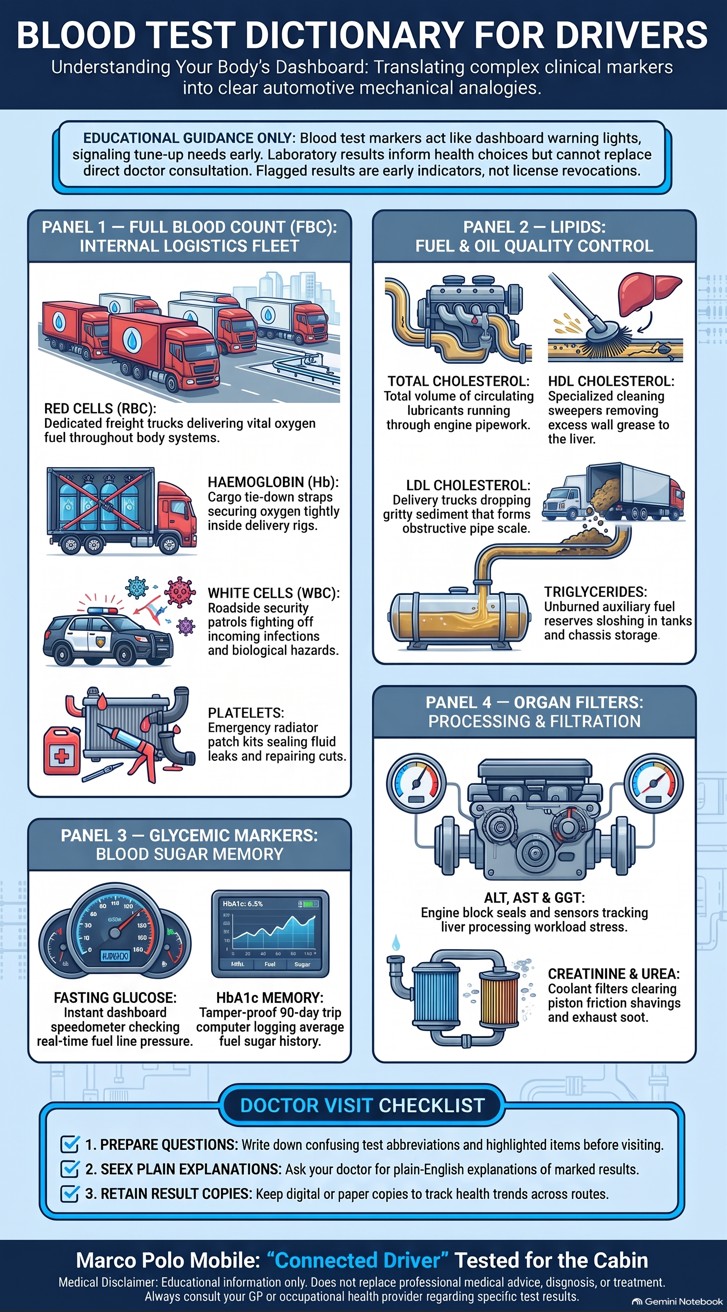
ALT, AST, GGT are known as liver enzymes. Think of them as bright indicators showing how busy your liver is as it clears away substances from food, alcohol, or medicine. A raised reading might suggest your liver is working a little too hard, something as simple as a few late nights or unfamiliar snacks can be the cause. By the way, since AST also appears in muscles and the heart, sometimes the result might point somewhere other than your liver.
Creatinine & urea check on your kidneys’ ability to remove waste from your body, almost like checking if your coolant system needs a refill. Creatinine comes from healthy muscle activity, while urea safely gets rid of nitrogen waste. When these markers go up, often it means your kidneys are working overtime, possibly due to dehydration or limited rest. If you find your coolant running low, topping up with water usually helps, your kidneys appreciate those extra sips, too.
Even at their busiest, your liver and kidney teams quietly help you recover from the demands of life on the road, and a minor change in test results is usually just a signal to pay extra attention, rather than an urgent problem.
Section 5 ( How to prepare for your doctor’s visit
If you need a check-up and are expecting blood tests, a little planning can make your appointment more productive and less stressful. Here are some valid tips to help you use your new understanding:
1. Writing down questions
Gathering your questions in advance, on paper or your mobile, helps make sure you address everything, even if the visit is brief. No question is too basic. Jot down any confusing abbreviations or result that looks unusual for someone in your line of work. This habit saves time and helps the discussion stay focused.
2. Asking for clear explanations
Medical language doesn’t always make sense at first sight. If numbers are highlighted or unfamiliar, don’t hesitate to ask your doctor for a plain-English explanation. Remember, highlighted numbers are often reminders to monitor, not immediate signs of illness. Speaking up always keeps the conversation useful for you.
3. Keeping copies of your results
By actively keeping physical or electronic copies of your blood test results, you make it much easier to track changes over time. Personal records are especially helpful if you work in multiple locations, since you can quickly show your history to new doctors or avoid repeating tests unnecessarily.
Marco Polo Mobile encourages drivers to stay prepared and informed by following the simplest routines, they’re practical steps anyone can take, not just medical experts.
The Marco Polo Mobile guarantee: Tested for the cabin
At Marco Polo Mobile, our team promises to deliver clear and practical health guidance designed specifically for professionals who spend long hours on the road. Everything is crafted to be direct and free of unnecessary technical terms, showing true respect for your time.
Every fact in this article is checked for real-world usefulness. When we say “Tested for the Cabin”, we mean that our advice works in the real settings where drivers live and work, aligning helpfully with your schedule and break requirements. Our focus is on education, never diagnosis; we want you to understand basic health information relevant to your unique work life. Marco Polo Mobile remains committed to honest and realistic content fit for anyone who depends on long-haul travel.
Frequently asked questions (FAQ)
Does this guide give specific target numbers for my blood test results?
No, this guide avoids listing exact numbers or target ranges, since personal values shift based on your lab, country, and individual circumstances. The main point is to make these terms clearer so you’re better equipped to speak with your own healthcare team.
Join the connected driver community
Professional drivers often work alone, and discussing health checks with others brings useful perspective and ease.
Have you ever been unsure about a medical result or felt lost reading abbreviations? Which part was the biggest challenge to understand? Please feel welcome to share your experience in the comments below.
This is a safe space to talk openly about confusing terms such as “HDL” or “HbA1c”. Please protect your privacy by not posting your test figures, photos, or any other personal details. Whenever you have a question specific to your results, the safest way is always to reach out to your doctor.
Important medical notice
As part of Marco Polo Mobile’s commitment, we put clarity and responsibility first when discussing your health.
MEDICAL DISCLAIMER: The information here is strictly for educational and informational use. It does not replace the advice, diagnosis, or treatment from a healthcare professional. Always consult your doctor or a certified provider about any health issue or goal.
The path to protecting your health behind the wheel starts with learning to read the key signs your body gives you. Gaining familiarity with your body’s “dashboard” changes a confusing medical statement into a practical resource for well-being as you travel near and far.
When you next meet with your doctor to talk through a medical report, you’ll have the key questions ready, and a better sense of how daily choices influence your health. Working together, you and your doctor can help keep your engine running smoothly, ensuring that every journey ahead is as safe and healthy as possible.