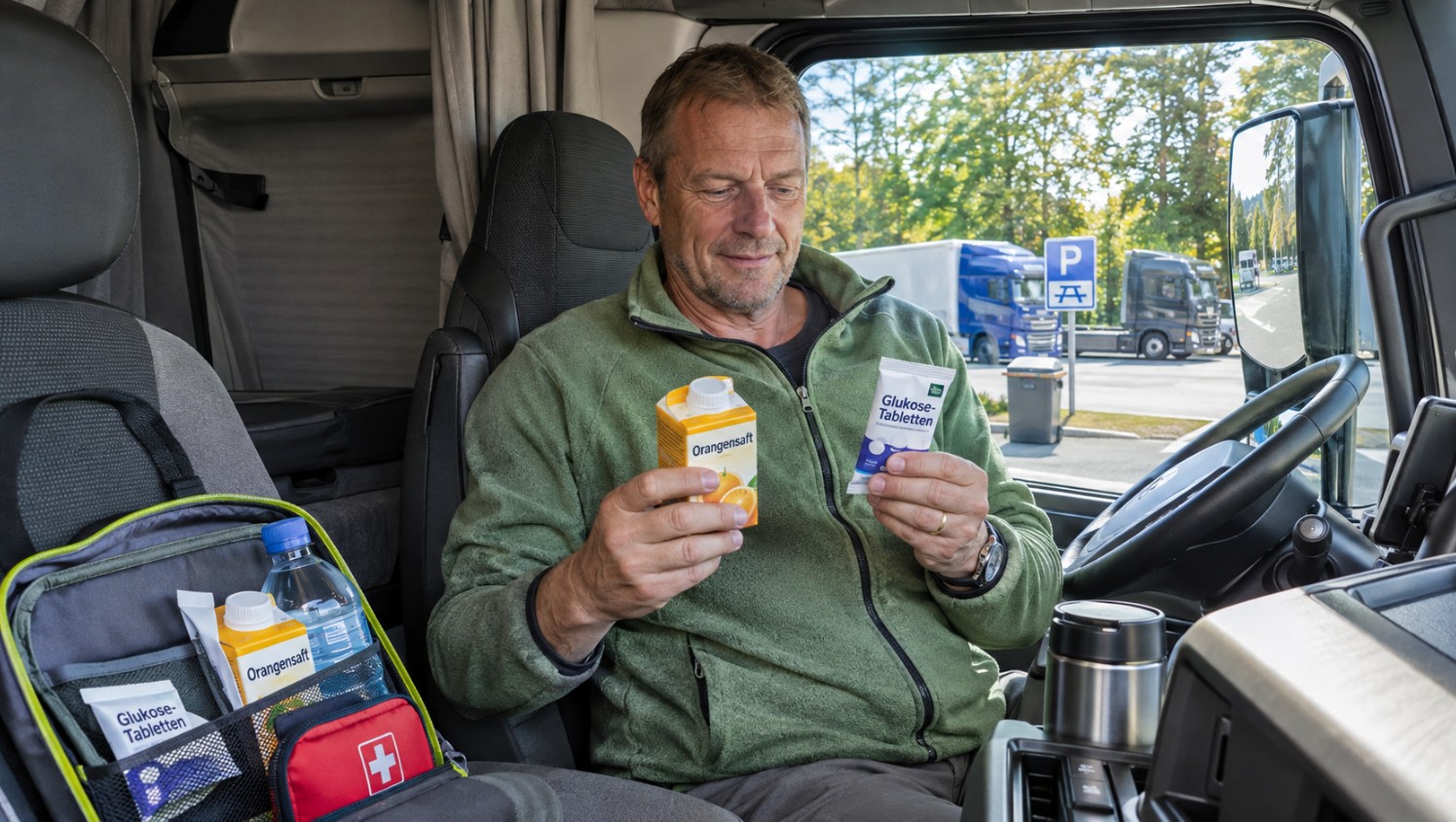
Imagine sitting in a lengthy border queue, already two hours after you usually eat, when you suddenly feel your hands quiver and a chilly sweat creeps over your forehead. Your vision gets blurry, and you become oddly irritable. This is not just hunger; it’s a sudden blood sugar drop, your brain urgently signaled that its energy supply is running dangerously low. Trust me, experiencing this behind the wheel is not something to ignore. What’s reassuring is that with a straightforward, two-step rescue kit stashed in your glovebox, you can quickly correct your blood sugar without having to overhaul your diet or routine, dramatically reducing your risk of mistakes during critical moments on the road.
Warning signs of a sugar crash behind the wheel
Any professional driver knows just how important it is to recognize when something’s off physically. The body gives clear warnings, sometimes before our minds fully catch up, that the brain is low on fuel. In these situations, your nervous system becomes your internal alarm, forcing your attention onto symptoms you shouldn’t overlook.
Recognising the physical signals
When you’re on the move, pay close attention to certain unmistakable warning signs. These include:
- Sudden shaking hands or experiencing a cold, clammy sweat
- Dizzy spells and unexpected lightheadedness
- Vision that blurs for no clear reason, making the road seem less distinct
- Irritability or irritation that flares up quickly
- Heavy, hard-to-shake mental fog and confusion
If you experience even one of these, your driving ability is already compromised. Heavy goods vehicles, in particular, demand sharp judgment and quick reactions. That’s why it’s so important not to ignore these clues, your body is essentially trying to keep you safe.
Immediate safety actions for drivers
No one wants to stop when they’re so close to their destination, but in this case, pulling over is absolutely necessary. The moment you spot these symptoms, pull to the side safely, switch off the engine, and put your hazard lights on. Don’t try to tough it out or keep moving. Even if you feel tempted, resisting the urge to press on could make all the difference for your safety and the safety of others.
| Symptom | Immediate Action | Next Steps |
|---|---|---|
| Shaking, cold sweat | Pull over, check glucose, treat if low | Take time to rest. Retest and only set off again after at least 45 minutes have passed since you felt fully better. |
| Dizziness, blurry vision | Pull over, check glucose, consider if medical help is needed | Wait it out, and if things don’t improve, seek a professional review. |
| Anger, heavy brain fog | Pull over, check glucose, rest | Don’t get back on the road until any mental fog and confusion have disappeared. |
Why chocolate bars are the wrong rescue food
When your head starts spinning, it’s natural to want something sweet like a chocolate bar or that pack of pastries you picked up at Lidl. But reaching for these treats when your blood sugar suddenly drops is not truly helpful, and can actually make things more complicated.
The problem with high fat content
The trouble is, these snacks carry a lot of fat. Being high in fat isn’t just a label, it slows down everything. Picture your digestive system as a busy highway: when fat is present, traffic grinds nearly to a halt. Instead of sugar speeding through and giving your brain quick relief, it gets stuck behind a traffic jam of fat, delaying its appearance in your bloodstream when you need it most.
Delayed relief and unpredictable spikes
If you go for a chocolate bar, you end up waiting much longer for your symptoms to go away. The confusion and lack of coordination can last, leaving you in a vulnerable state right when you need to be alert. Plus, fatty snacks often introduce a completely unpredictable blood sugar rhythm, sometimes keeping levels low for too long, then abruptly sending them sky high much later. That’s why, in a pinch, the best remedy is to use sources of sugar that are as direct as possible, with nothing slowing them down. It’s a rule drivers at Aldi have long relied on for clarity and safety.
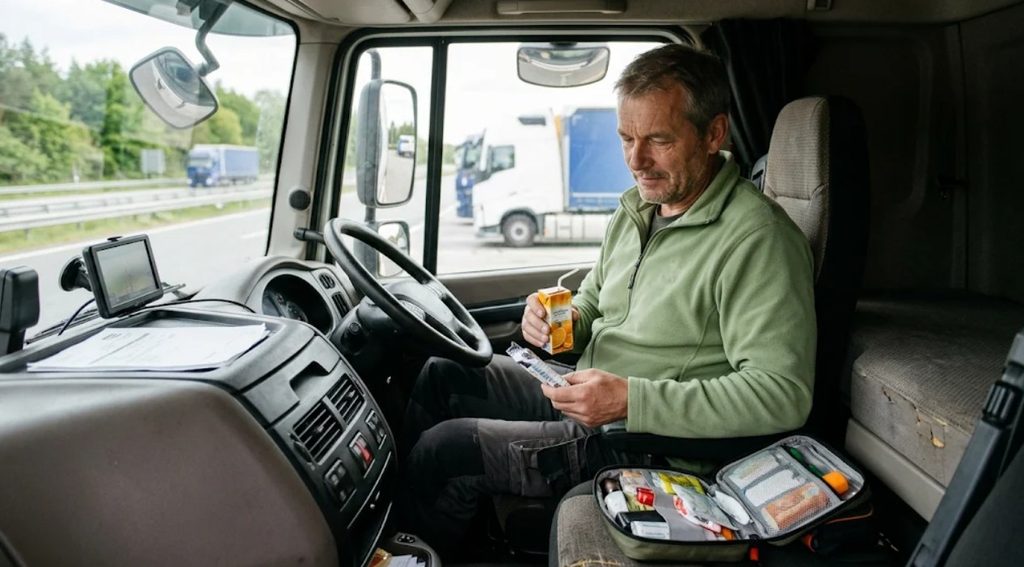
The 2-step glovebox rescue kit (The 15-15 rule)
Managing low blood sugar on the road works much more smoothly when you stick to a simple, proven guide: the 15-15 Rule. With just two steps, it helps you recover quickly, not by following a complicated diet, but by taking the right action at the right time.
Step 1: Fast rescue
First, after finding a safe place to stop your truck, give your body a precise and rapid boost with 15 grams of pure, fast-acting sugar. You don’t need to overthink it. Simple choices, including:
- 3 to 4 glucose tablets
- A 150 ml mini-carton of plain fruit juice
- Two packets of sugar or honey mixed with water
These can be found at any Kaufland or similar supermarket. Once you’ve had your sugar, set a 15-minute timer (many drivers use the alarm on their Marco Polo Mobile for this). After that time, check if you’re feeling better. Still struggling? It’s important to repeat the same step and wait again.
Step 2: Steady lock-in
After you feel steady and alert, it’s not quite time to drive. This step locks in your recovery: eat a slow-release snack combining complex carbohydrates and some protein or fat. Options like whole-grain oatcakes with raw nuts are excellent, nutritious, transport-friendly, and able to keep your blood sugar stable until you’re able to have a full meal.
The mandatory recovery wait
Feeling normal again is just half the story. Your brain and body need downtime to recover completely. Make sure you rest for at least 45 minutes after full recovery before considering getting back on the road, helping to avoid mistakes caused by lingering effects.
How to prevent sugar crashes before they start
Honestly, preventing an energy crash is the best solution. You avoid those risky hard shoulder stops, and the stress and uncertainty that come with them. Making a few simple habits part of your day can really protect you on long hauls across Europe.
Essential daily habits for steady energy
- Always have breakfast before driving: There’s a good reason drivers are encouraged not to start shifts on an empty stomach. Skipping breakfast can set you up for a challenging dip down the road. Choose slow, steady foods like wholegrain oats or rye bread, which help stabilize your blood sugar for hours.
- Avoid using energy drinks as your first caffeine hit: While the quick jolt from a sugary can seems tempting, it creates a pattern where your energy spikes then plunges sharply soon after. For staying alert without causing dips, water or simple black coffee generally work best. Save sugary drinks as true rescue options instead of daily habits.
- Keep your glovebox stocked and ready: Take it from experienced long-distance drivers, never let your simple rescue kit run empty. Lidl, Aldi, and Kaufland all offer affordable choices for glucose tablets, juice, and oatcakes, which stand up well over time in a truck’s glovebox.
Making these habits a consistent part of your daily preparation gives your brain and body the dependable fuel they need. If you keep these routines, you’re far less likely to deal with those crash-and-burn cycles that disrupt so many driving shifts.
The Marco Polo Mobile guarantee: passed through the ‘cabin test’
It’s important that every tool in your emergency kit stands up to the tough life of an international hauler. Marco Polo Mobile has evaluated rescue kits specifically for truck cabs, going for solutions that don’t cost much, travel well, and easily fit inside your glovebox so you’re never caught off guard.
Surviving extreme cabin temperatures
Your kit must work no matter what conditions strike. In real-world trucking, cabins heat up past 70°C on a sunny summer day, and drop well below zero in deep winter. You can be confident a well-chosen rescue kit will keep its usefulness, the Marco Polo Mobile recommendations are made with these tough surroundings firmly in mind.
Practical storage solutions
For keeping your kit effective, here’s what to keep in mind:
- Protect glucose tablets and oatcakes from hot weather by keeping them in insulated bags or beneath a seat, where heat is less severe.
- Keep juice cartons out of direct sun and don’t let them freeze, as the seals can break down and the contents may spoil.
- Rotate your foods, check dates routinely, so every item is fresh when you need it most.
Paying attention to these simple tips gives you peace of mind that your supplies will come through in an emergency. Effective storage really is the difference between a kit that is merely present and one that’s truly reliable.
Frequently asked questions (FAQ)
What are the first physical warning signs of low blood sugar while driving?
It’s important to notice key early warnings like sweating that seems to come out of nowhere, hands that start to tremble, anxiety, dizziness, blurred vision, or a hunger that goes beyond normal. Mental fog or confusion is also a clear indication. If you feel any of these, pull over, don’t try to push through and hope you’ll get better on the move.
Why shouldn’t I eat a chocolate bar to fix a sudden blood sugar drop?
Chocolate bars contain too much fat. Although you might crave something sweet, fat blocks the quick digestion and absorption that your brain needs in an emergency. Instead, symptoms can linger dangerously. Choose simpler sugars that act fast and don’t keep you waiting.
What is the ’15-15 Rule’ for handling low blood sugar in a truck cab?
The ’15-15 Rule’ is straightforward: consume 15 grams of fast-acting sugar, then wait 15 minutes. If you’re not back to normal, repeat the process. Once you recover, enjoy a snack with longer-lasting energy (such as oatcakes) before continuing with your journey.
Can drivers without diabetes experience sudden blood sugar crashes on long shifts?
Major, medical hypoglycaemia is quite rare in non-diabetic drivers, but severe meal delays or over-reliance on sweet drinks when you’re already hungry can still cause significant energy drops, fatigue, and dizziness. Keeping regular meals and hydrating frequently is the most effective way to keep symptoms at bay.
Join the connected driver community
Delays, border waits, traffic jams, are simply part of the international driving experience. Over the years, drivers have learned that sharing insights and practical advice can save headaches for others.
Have you ever faced an unexpected energy crash because a meal was overdue? Maybe you keep something small, like juice or a packet of glucose tablets, handy in your cab for emergencies? Let others know what’s worked best for you or how you handle long stretches without food.
Every time drivers share their real-world experiences, the whole community grows stronger and safer. Focusing on practical steps, like regular water breaks, using shelf-stable snacks, and checking with healthcare professionals when unsure, prepares everyone for the road ahead.
Important medical notice
This guidance is meant to be a trusted general resource, not a replacement for personal medical advice, treatment, or licence-related recommendations. It’s essential to know what you are dealing with and act responsibly in every hypoglycaemia emergency, whether it’s your first or not.
General information, not diagnosis
Everything here is meant for education and awareness. Only your own doctor, diabetes team, or qualified healthcare provider can assess symptoms that occur repeatedly or seem especially worrisome. Never simply assume or self-diagnose a sugar crash without getting an expert opinion.
Driving safety and legal obligations
Carrying an emergency snack in your cab does not mean you are automatically safe to drive. Blood sugar episodes can return unpredictably, and mental clarity may still be affected long after you treat an episode. It’s not just a good idea, it’s essential, not to drive until at least 45 minutes have passed since you are fully alert and symptom-free.
MEDICAL DISCLAIMER: The contents of this article serve to inform and educate. They do not replace the advice, assessment, or guidance of a qualified medical professional. For anything beyond general questions, especially personal health goals, always reach out to your healthcare team.
By staying aware of your body’s warning signs and having the right supplies within arm’s reach, you’ll be in the best possible position to handle delays and keep your trips safe and successful. Equip your glovebox with the proven essentials, plan for your meals, and give yourself and your vehicle what it takes to reach every destination with confidence and steady energy, even when surprises come your way.