

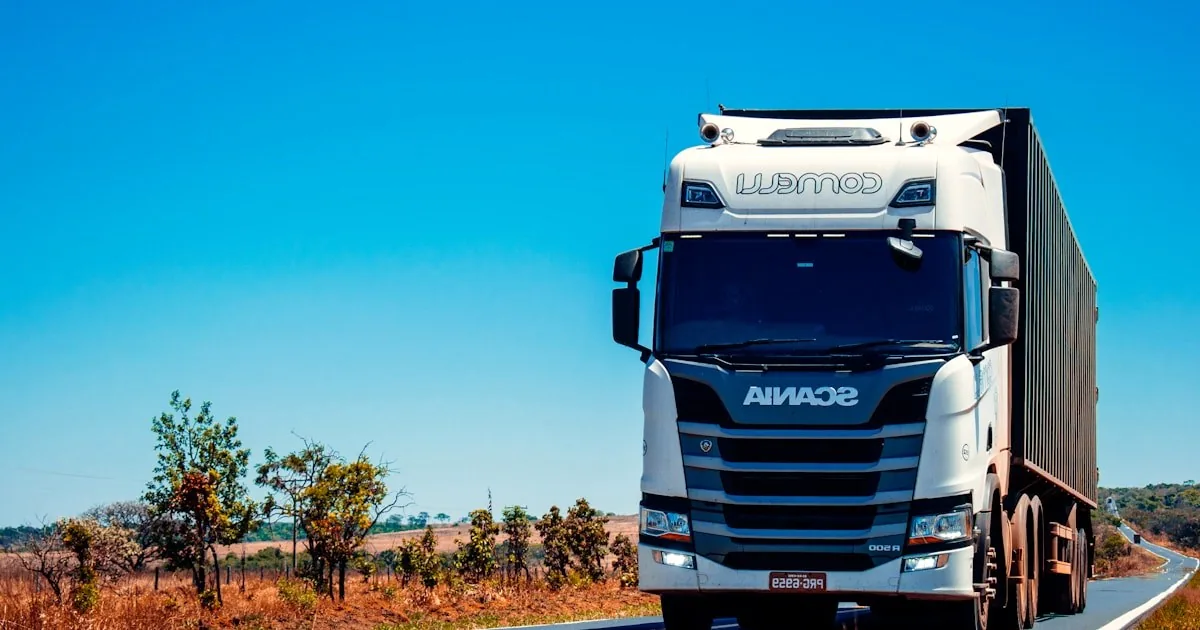
The right apps can save you hours of frustration, hundreds of euros in fines, and help you find parking before you hit your 9-hour driving limit. After surveying over 200 professional drivers across Europe and testing dozens of apps ourselves, we’ve compiled the definitive list of tools that actually work for long-haul trucking in 2026. Forget the generic consumer GPS that routes you under a 3.2m bridge — these are purpose-built for HGV work.

Truck-Specific GPS and Navigation Apps
Your navigation app is the backbone of your daily work. A wrong turn down a restricted road in central Paris or Brussels can cost you a €135 fine and an hour of reversing. Here’s what the professionals are using right now.
Sygic Truck & Caravan GPS remains the top choice among European drivers we surveyed, with 67% using it as their primary navigation. It lets you input exact vehicle dimensions, weight, and cargo type (hazmat, refrigerated, oversized). The app covers all EU countries plus the UK, Switzerland, and Norway with offline maps — essential when you’re crossing through areas with spotty mobile coverage like rural Romania or the Scottish Highlands. Annual subscription runs about €79.99, though lifetime licenses occasionally go on sale.
CoPilot Truck offers strong competition, especially for UK-based drivers doing European routes. Its lane guidance is exceptionally clear on complex German autobahn interchanges. The app warns you about low emission zones in cities like Amsterdam, Munich, and Milan before you enter them.
TomTom GO Fleet integrates directly with many fleet management systems, which makes it popular with company drivers. Real-time traffic data pulls from millions of connected devices, giving you accurate ETAs even during the Friday afternoon chaos on the A1 around Bologna.
One tip: always run your route through your navigation the night before. Check for any weekend driving bans that might affect your timing — Germany, Austria, France, and Italy all restrict trucks over 7.5t on Sundays and public holidays, with specific time windows varying by country and road type.
Parking Apps That Actually Show Available Spaces
Finding legal, safe parking is the single biggest daily headache for European truck drivers. The EU estimates a shortage of over 100,000 secure truck parking spaces, and that gap grows every year. These apps won’t magically create spaces, but they’ll help you find what exists.
- Truck Parking Europe covers over 35,000 locations across the continent, with user-submitted photos and real-time availability updates from other drivers who’ve just left or arrived.
- SNAP (Secure Network of Autonomous Parking) focuses specifically on certified secure parking areas — if you’re carrying high-value cargo, this is your go-to for finding fenced, monitored facilities that meet insurance requirements.
- Park4Night started for campervan travelers but has expanded significantly to include truck-suitable locations, particularly useful in Spain, Portugal, and Southern France where dedicated truck stops are sparse.
- Bosch Secure Truck Parking works with a network of premium facilities across Germany, Benelux, and Poland, offering advance reservation — you pay €15-25 per night but guarantee your spot, which beats circling for an hour and then parking illegally.
Start looking for parking at least two hours before your driving time runs out. If you’re cutting it close on your EU driving hours limits, you don’t want to be desperately scanning for spaces with 30 minutes left on your tachograph.
Fuel Apps and Cost Optimization Tools
Diesel prices across Europe can vary by €0.40 per liter between countries, and even €0.15 within the same country depending on location. For a 400-liter tank, that’s real money — potentially €60-160 per fill-up.
Tricount Fuel Prices aggregates data from over 180,000 European stations, updated by drivers in real-time. Before crossing from Germany into Poland, you can check whether it’s worth filling up now or waiting 50km.
| Country | Average Diesel Price (May 2026) | AdBlue Availability |
|---|---|---|
| Luxembourg | €1.42/L | Excellent |
| Poland | €1.48/L | Good |
| Spain | €1.51/L | Good |
| Germany | €1.67/L | Excellent |
| France | €1.71/L | Excellent |
| Netherlands | €1.84/L | Excellent |
| UK | £1.58/L | Good |
DKV App and AS24 Driver are essential if your company uses their fuel cards. Both show accepted stations along your route, current prices, and available services like showers and laundry. The AS24 network now includes over 700 stations across Europe with dedicated truck lanes — no waiting behind six caravans to reach the pump.
GasBuddy works well in Western Europe, though coverage drops off east of Vienna. Its crowd-sourced price reporting is usually accurate within a few hours.
Compliance and Documentation Apps
Paperwork errors and compliance issues lead to roadside delays, fines, and sometimes impounded vehicles. Digital tools are becoming mandatory rather than optional.
Tachograph apps vary by hardware manufacturer. If you’re running a VDO digital tacho, the TIS-Web Fleet app syncs your driver card data automatically. Stoneridge users have their own equivalent. These apps alert you when you’re approaching daily or weekly limits and help you track your tachograph compliance across multiple vehicles.
eCMR apps are spreading fast. The electronic consignment note is now legally recognized in 31 European countries, and apps like Transfollow and Pionira let you complete documentation without printing, signing, and storing paper copies. Belgium, Netherlands, and France are pushing hard for eCMR adoption — you’ll increasingly find shippers who insist on it.
Border crossing apps become valuable when you’re doing UK-EU runs post-Brexit or heading into Switzerland and Norway. The UK’s GVMS (Goods Vehicle Movement Service) has its own app for managing customs declarations. Switzerland’s NCTS transit system requires advance registration that’s much easier to manage on mobile.
Health, Rest, and Route Planning Tools
Long-haul work takes a physical toll. Smart drivers use technology to manage their wellbeing, not just their routes.
Sleep Cycle or Sleep Score track your rest quality during breaks. If you’re consistently showing poor sleep quality despite taking full 11-hour rest periods, that data helps you identify whether the problem is noise, temperature, or something requiring medical attention.
Headspace and Calm both offer driving-specific audio content for alertness and stress management. Long boring stretches on the E30 through northern Germany or the A4 across Poland can lull you into dangerous drowsiness — a 10-minute guided reset during a coffee break genuinely helps. Check out more tips on staying alert during long hauls.
Route4Me and OptimoRoute help owner-operators and small fleet drivers optimize multi-stop routes. If you’re doing distribution work with 8-12 drops per day, these apps can shave 50-80km off your daily distance by calculating the most efficient sequence.
Waze remains useful as a secondary navigation for real-time incident reports, even though its routing isn’t truck-specific. Running it alongside your primary HGV navigation catches traffic jams and accidents faster than most dedicated truck apps.
Communication and Translation Apps
You’re dealing with warehouse staff, border officials, and other drivers across two dozen countries and just as many languages. Communication tools aren’t optional anymore.
Google Translate with downloaded offline language packs handles most situations. The camera translation feature reads signs, documents, and shipping labels in real-time — point your phone at Hungarian delivery instructions and see them in English instantly.
Transics TX-FLEX and similar fleet communication platforms provide direct messaging with dispatch, digital POD signing, and exception reporting. If your company uses one, learn it properly — drivers who master their fleet app spend less time on the phone sorting out problems.
WhatsApp or Telegram groups for specific routes (UK-Spain refrigerated, Benelux-Poland general cargo) provide invaluable real-time intelligence. Other drivers share border wait times, parking availability, and police control locations. Join three or four relevant groups and you’ll have better information than any app can provide.
Frequently Asked Questions
What’s the best free truck GPS app for Europe?
Sygic offers a limited free version, but honestly, no free app matches what you need for professional work. The €79.99 annual cost of Sygic Truck or CoPilot pays for itself the first time it saves you from a low bridge strike or an LTZ fine. If budget is tight, try the free trials first — most offer 7-14 days — and pick one to invest in.
Do I need different apps for driving in the UK versus the EU?
Post-Brexit, UK routes require specific attention. You’ll need the GVMS app for customs movements and should ensure your navigation has updated UK maps. CoPilot Truck handles the UK particularly well. For fuel, AS24 and DKV both work on both sides of the Channel, though payment systems differ slightly.
How reliable are truck parking apps for real-time availability?
They’re helpful but not perfect. Accuracy depends entirely on other drivers reporting when they arrive and leave. Popular rest areas along the A2 or E40 fill up by 17:00 most weekdays regardless of what the app shows. Use parking apps for finding locations, but call ahead for secured parking or book in advance during peak periods like pre-Christmas freight season.
Can I use regular consumer GPS apps like Google Maps for truck driving?
Google Maps now includes a “truck routing” option in some regions, but it’s not reliable enough for professional use across Europe. It doesn’t know your exact height, weight, or cargo restrictions. One routing error onto a prohibited road costs more in fines and lost time than a year’s subscription to proper truck navigation. Don’t risk it.
Which apps help with weight and load calculations?
Axle Load Calculator and TruckWeight help you distribute cargo properly and check axle weights before hitting weighbridge checkpoints. Swedish and Finnish authorities are particularly strict about ax