

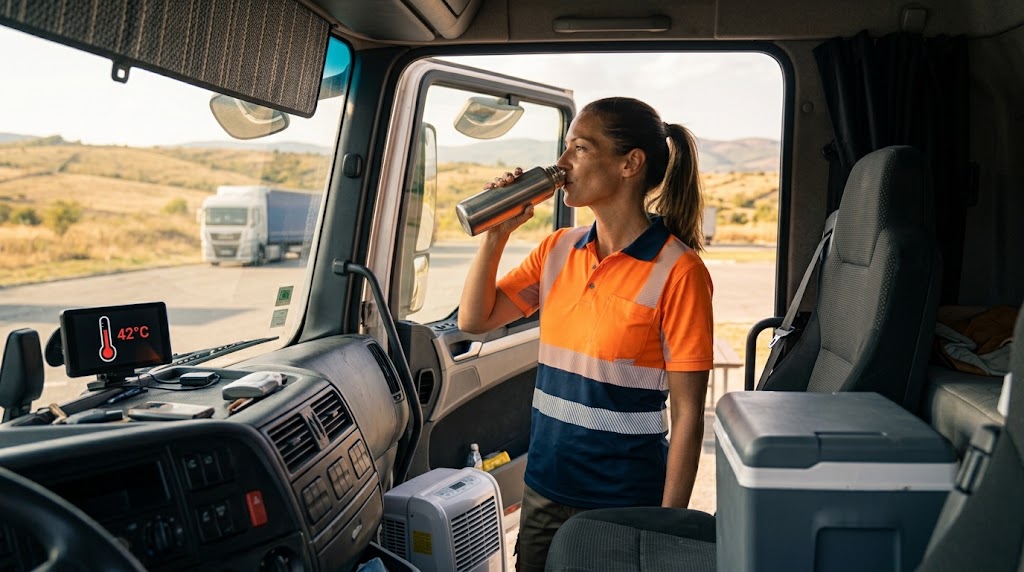
It’s early September 2026. The calendar indicates the arrival of autumn, yet, practically speaking, the air along European highways still shimmers with relentless late-summer heatwaves. For international long-haul truck drivers, the reality of an overheated cabin is much more than a discomfort, it’s a genuine threat to your cardiovascular health. After months of cumulative heat exposure, early September often brings a hidden strain on your heart, so this is an especially crucial time to keep an eye on your blood pressure, catch any early signs of silent cardiac fatigue, and look out for your well-being while driving.
How heat changes your blood pressure
You might notice, even before the sun fully rises, that your truck’s cabin can quickly become unbearably warm. Here’s where your body gets creative: to shed excess heat, it opens up blood vessels near your skin, a process known as peripheral vasodilation. As a result, overall resistance in your blood vessels drops quite a bit. This isn’t just a small change: your blood pressure may dip suddenly, and that’s when feelings of dizziness, slow reactions, or even an unexpected bout of sleepiness behind the wheel can appear without much warning.
Although your body tries to adapt, the heart has to put in extra effort. This quickened heartbeat, a response doctors call reflex tachycardia, might quietly raise your pulse by 20 or 30 beats per minute. Over a long shift, it wears down your strength without you even realizing it. It doesn’t matter if you’re new to the job or an experienced veteran; when the heart works overtime for hours in a sitting position, the strain becomes real.
There’s another layer to this risk. When you sweat in a hot cabin and don’t drink enough, your blood becomes noticeably thicker. This means it moves more slowly through tiny blood vessels, and unfortunately, it raises your risk for problems like deep vein thrombosis. Remaining still for long periods compounds the challenge. It’s fair to say, dehydration is a sneaky troublemaker that is often easier to prevent than reverse.
The warning signs behind the wheel
By the way, catching signals from your own body can help prevent emergencies before they happen. In everyday driving, these particular symptoms often stand out:
- Sudden fatigue after rest stops: If you feel overwhelmingly tired right after a break, it could point to a sharp fall in blood pressure, typically triggered by the blood vessels’ excessive expansion.
- Heavy eyelids: If thinking gets harder and you feel yourself drifting mentally, that’s often a sign your brain isn’t getting enough oxygen because of heat disruption.
- Lightheadedness when standing: Feeling dizzy after getting up from your seat is a classic indicator of orthostatic hypotension. It’s more common after being parked in a stuffy cabin.
- Persistent headaches: Sometimes, headaches that refuse to go away are the result of unstable blood flow, thickened blood, and an unbalanced level of minerals in your system.
Roadside hydration and electrolyte balance
Anyone behind the wheel should know: keeping enough fluid in your blood is the simplest and most effective shield against heat-related problems. Hydration helps your heart work less hard and keeps blood from thickening.
Practical hydration rules for cabin life
Instead of suddenly drinking large quantities, it’s much more effective to sip water throughout the journey, every 20 to 30 minutes, about 150–250 ml at a time. This steady approach helps your body manage heat more easily. Also, try to avoid sweetened energy drinks; they tend to spike blood pressure briefly and leave you dehydrated. It’s absolutely essential to combine water with a pinch of salt or mineral-rich snacks, so you don’t end up with low sodium in your system, which is another risk in hot weather.
Smart choices at European roadside stores
In practice, shopping at stores such as Kaufland or Lidl makes it straightforward to build a workable hydration kit. You can usually find mineral water with proper sodium content and also pick up long-lasting snacks to help replace lost minerals.
The role of essential electrolytes
| Electrolyte | Function in heat | Ideal roadside snack options |
|---|---|---|
| Sodium | Prevents blood pressure drops | Salted peanuts, pretzels, wholegrain crackers |
| Potassium | Maintains heart rhythm | Dried apricots, banana chips, fresh oranges |
| Magnesium | Prevents muscle cramps | Almonds, cashews, trail mix |
Cabin climate control and resting habits
To maintain a steadier heart rate and avoid sudden spikes or drops in blood pressure, paying attention to your environment and break habits can make a bigger difference than many drivers realize. Here are some real-world actions to support cardiovascular health during driving and rest:
- Use solar window covers: Reflective covers are surprisingly effective, blocking solar heat before it enters the cabin. This means less strain on your heart when returning from a break.
- Avoid extreme A/C drops: Extreme cold, following hot outdoor air, might seem refreshing but can actually shock your body and cause your blood pressure to swing. Instead, lower the cabin temperature gradually for safer adjustment.
- Step into shaded areas: Spend at least some of your rest time outside the vehicle, ideally in a shaded, breezy spot. Light stretching or walking outside the cab goes a long way in restoring your circulation and aiding blood pressure balance.
The Marco Polo Mobile guarantee: Passed through the ‘cabin test’
Our commitment to you is straightforward: every tip mentioned here has been selected for practicality by those who know trucks best, drivers themselves. These recommendations have been trialed under real European road conditions, under the constraints of current driving laws. The suggestions, like steady water sipping and using sunshades, can all be practiced with items that are either already with you or conveniently available while on the move. The aim is always to support your occupational safety, not add any extra complication or equipment. We appreciate how precious your time and focus are on the road.
Frequently asked questions (FAQ)
Why does extreme cabin heat make me feel suddenly sleepy even if I slept well?
Heat prompts your body to release extra heat by opening up blood vessels at the skin’s surface. This lowers your blood pressure and reduces oxygen going to your brain, so you feel drowsy unexpectedly, even with a full night’s sleep behind you.
Does heat make blood pressure go up or down?
In most cases, heat pulls blood pressure down, not up. When your body creates wider vessels to drop heat, it reduces resistance and allows pressure to fall. Your heart tries to compensate by beating faster, but this constantly adds to its workload.
Why are energy drinks dangerous when driving in high cabin heat?
Those drinks combine sugar and caffeine, making you lose fluid more quickly and thickening your blood. They sometimes give a brief burst of energy, but the resulting crash can actually make driving less safe, especially when combined with heat stress.
How can I stabilize my blood pressure during long rest stops in warm weather?
Your best bet is to sip water mixed with minerals, skip big salty meals, and do some stretching outside in the fresh air. Using solar window covers keeps the cabin interior from getting excessively hot, which also helps keep your circulation steady.
Join the connected driver community
Dealing with relentless summer heat is often made easier by learning from fellow drivers’ lived experience. Exchanging tips and lessons learned on European routes can make all the difference and help you react more quickly to heat risks, and keep your focus on safe driving.
What small strategies have you found useful in coping with hot late-summer highways? Feel free to contribute your insights and observations, your feedback can really help others in the driving community.
Important medical notice
MEDICAL DISCLAIMER: Remember, this article is designed to inform and guide, but it is not a replacement for personal medical advice. Always check with your physician or healthcare provider if you have questions or concerns about your health.
Staying well in September heat is about much more than cracking a window open. By understanding how heat changes your body’s rhythms and making informed adjustments to drink, eat, and rest habits, you put practical, preventative power in your own hands. Adjusting your routine, like staying hydrated, being savvy with your breaks, and preparing your cabin, can safeguard your heart and energy levels through the last of the summer’s heat.
As autumn slowly approaches on the European highways, it’s wise to remain alert to the quieter ways in which heat can sap your strength. Keep your windows shaded, your supplies stocked with electrolyte-rich items (perhaps from Kaufland or Lidl), and don’t ignore even faint warning signs from your body. After all, your safety on the road is the highest priority.