
Spending nine hours a day in the driver’s seat, especially while depending on quick, greasy service-station meals, can have a significant impact on your cardiovascular system. Even though these habits seem convenient during long trips, they quietly limit your body’s natural ability to burn fats efficiently, which can allow cholesterol and triglycerides to collect inside your arteries.
Fortunately, with some genuinely simple adjustments, such as thoughtful supermarket choices at spots like Lidl, Aldi, or Kaufland, and short, practical routines during breaks, you can take meaningful steps to safeguard your heart health while staying on the move.
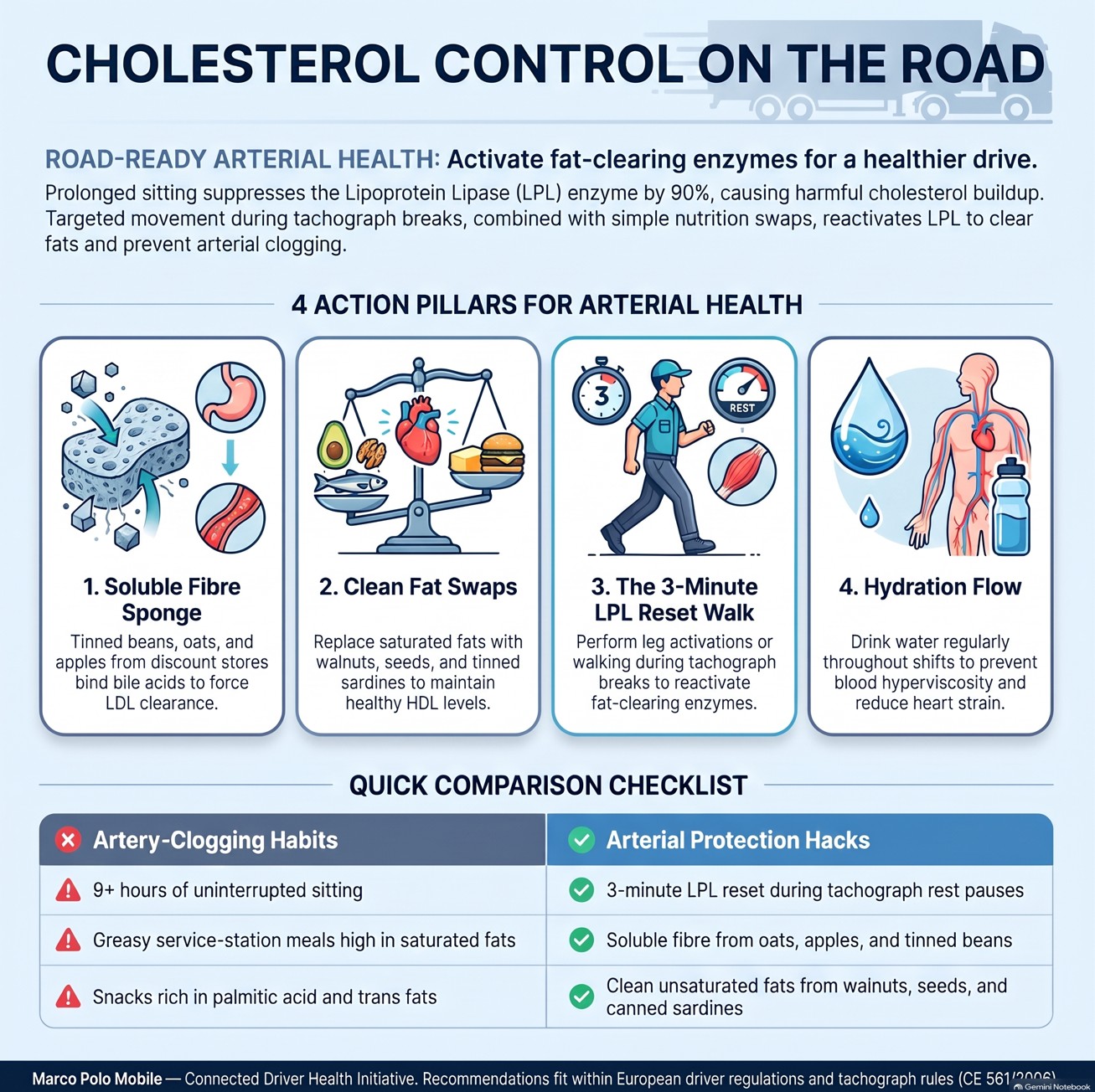
Why sitting 9 hours a day elevates bad cholesterol
An extended period of inactivity in a truck cab may not feel harmful day by day, but over time it changes your body’s approach to handling fats. This often overlooked factor is mainly due to the effect of sitting on a key enzyme in your muscles, known as lipoprotein lipase (LPL).
The enzyme mechanism
As you sit for these long hours, LPL, which works like your body’s own fat-clearance team, sees its activity drop sharply, sometimes by as much as 90 percent. When you’re not moving, your muscles “decide” that they don’t need much energy, so they stop insisting on the delivery of fuel.
This dramatic slowdown means fats such as triglycerides stick around much longer in your bloodstream. Eventually, these stubborn particles turn into small, dense LDL cholesterol, known as the type that most often sticks to your artery walls and causes trouble for your heart. Understanding this process helps explain why so many professional drivers notice unwanted changes in their blood test results, sometimes even when other aspects of health feel manageable.
Strategy 1 ( Sourcing soluble fiber at roadside supermarkets
If you think eating healthily requires lots of preparation or a proper kitchen, it’s reassuring to know that many accessible options exist. Supermarkets such as Lidl, Kaufland, and Aldi in Europe reliably offer practical, affordable foods packed with soluble fiber, and best of all, there’s no cooking needed.
The gut sponge effect
People often describe soluble fiber as acting like a sponge in your digestive system. By grabbing onto cholesterol-rich bile acids, it helps your body flush them out, which means your liver has to draw up more LDL cholesterol to make replacements. For busy truck drivers, this means you can support heart health just by making certain food swaps on the road.
Consider these simple picks that really fit the trucker lifestyle:
- Oatcakes: These are handy and provide beta-glucan, a fiber that actively lowers cholesterol.
- Tinned beans and chickpeas: Extra convenient and packed with fiber, they deliver up to 4 grams per portion.
- Apples: No fuss, easy to store and eat on the go. The pectin in apples can support your arteries.
- Raw carrots: Good for overall digestion, but with less soluble fiber than beans or oats.
| Food Choice | Soluble Fibre Strength | Preparation | Cab Storage |
|---|---|---|---|
| Tinned Beans | Strong | Ready to eat (drain first) | Cupboard (fridge once opened) |
| Oatcakes | Moderate | Ready to eat | Room temperature, sealed |
| Apples | Moderate | Ready to eat | Cool, dry place |
| Raw Carrots | Weak | Ready to eat | Cool place or fridge |
Each supermarket offers its own selection, but with a keen eye, you’ll notice that these wholesome choices are often both budget-friendly and durable enough for storage in your cab.
Strategy 2 ( Swapping saturated fats for clean unsaturated fuel
Snacks from gas stations, especially the fried or heavily processed types, are full of saturated fats like palmitic acid. These ingredients tend to drive up inflammation inside your arteries and raise unwanted cholesterol levels quickly, so avoiding them is wise whenever possible.
Building a heart-healthy cab pantry
You’re not stuck, though. By steadily switching from heavy snacks to those packed with unsaturated fats, you not only boost your levels of “good” HDL cholesterol, which helps clear cholesterol out of your system, but also continue to feel satisfied between meals. You don’t need to eat less, just eat smarter.
- Plain walnuts and pumpkin seeds: Simply swap in a handful (about 30 grams) instead of going for crisps or pastries. They are rich in polyunsaturated fats, and you can keep them fresh by storing them in airtight containers away from sunlight.
- Tinned sardines: Choosing sardines in olive oil or tomato sauce instead of processed meats can make a major difference. They’re practical, loaded with omega-3s, and can be kept in your cab until you open them.
- Extra virgin olive oil: Having a small bottle ready lets you drizzle over bread or tinned beans instead of spreading butter, cutting your saturated fat intake on the spot.
By putting a bit of thought into your supplies, you can provide your body with the kind of fats that actually protect your heart, instead of those that quietly damage it.
Strategy 3 ( The 3-minute ‘LPL reset’ walk during tachograph breaks
Contrary to what you might expect, even brief movement breaks bring important benefits, especially for your heart. Taking a short walk during required driving breaks is a straightforward way to keep your metabolism engaged and your fat-processing enzymes working.
Reactivating your muscles
Just three minutes of brisk walking around your vehicle, or doing calf raises by rising onto your toes, gets your muscles contracting again. This simple movement acts like flipping a switch on your body’s LPL enzyme and seamlessly fits into your daily drive.
- Step out of the cab safely when it’s time for a scheduled pause.
- Walk with purpose for three minutes, or, if you prefer, do toe lifts or ankle pumps even in your seat.
- These little routines are especially valuable when your schedule won’t allow for a proper workout.
Although the effort is modest, it delivers a crucial benefit: by reactivating muscle contractions, you help keep your fat metabolism working at its best, limiting sharp rises in blood triglycerides after meals. It is important to remember that under current UK and EU driving laws, light physical activity during rest breaks is allowed and won’t breach your official rest requirements.
Strategy 4 ( Hydration and blood viscosity
It is surprisingly easy to overlook how central hydration is for maintaining healthy blood flow. If you become dehydrated, your blood thickens and makes it harder for cholesterol particles to move naturally, raising the strain on your heart and arteries.
Smart drinking habits
Here are a few tips that most drivers find useful:
- Drinking water steadily throughout a shift, rather than all at once, helps manage your need for toilet breaks and maintains hydration.
- Keep an eye on the color of your urine; a light yellow shade typically means you’re drinking enough.
- To make water more pleasant, try a splash of sugar-free squash or add a slice of lemon, it really does help with taste, especially over a long drive.
While water won’t quite flush cholesterol from your arteries, keeping your blood less concentrated is a fundamental way to reduce everyday stress on your heart, particularly during warmer months or intense driving sessions.
The Marco Polo Mobile guarantee: Passed through the ‘cabin test’
Every recommendation in this guide has genuinely been evaluated through the real-world experiences of drivers and the editorial promise at Marco Polo Mobile. The strategies outlined require no special equipment, fit into even the tightest trucking budgets, and are completely compatible with the rhythms of European transport regulations. You do not need a stovetop or fancy tools to adopt them; all you need is an open mind and the willingness to experiment with healthier habits on the road.
Frequently asked questions (FAQ)
Why does sitting for long hours make my bad cholesterol (LDL) go up?
Remaining seated for extended periods sharply reduces the activity of lipoprotein lipase (LPL), the enzyme in your muscles responsible for breaking down fats in the bloodstream. With less enzymatic action, triglycerides do not get cleared efficiently, and that leads to an increase in LDL cholesterol, heightening the chance of artery blockage.
What are the best roadside foods to lower cholesterol naturally?
Roadside supermarket staples such as oatcakes, apples, and tinned beans are reliable sources of soluble fiber, which helps remove cholesterol from your system. At the same time, favoring walnuts, pumpkin seeds, sardines, and extra virgin olive oil instead of saturated fat-heavy snacks can help improve your cholesterol balance.
Can a 3-minute walk during a rest stop really help clear fat from my bloodstream?
It certainly helps. Even brief, purposeful activity like walking or calf raises engages your leg muscles and “wakes up” the LPL enzyme, which plays a leading role in fat breakdown. Starting this process after meals can make a real difference in managing blood fat levels during long driving shifts.
Will high cholesterol affect my professional truck driving medical exam?
For professional drivers in the UK, high cholesterol by itself is not a reason for DVLA notification or licence withdrawal. What counts most in these exams are actual heart conditions, like previous heart attacks. Keeping cholesterol in a healthy range is still important for long-term well-being, but isolated high readings usually don’t impact your professional eligibility if you have no symptoms.
Join the connected driver community
Do you have a go-to healthy snack or meal you pick up at a highway supermarket like Lidl or Kaufland? Sharing your tips with fellow drivers can help everyone stay a bit healthier, so feel free to join the discussion below.
Important medical notice
MEDICAL DISCLAIMER: All information presented here is for learning and general guidance only. For any personal health issues, or if you are unsure how advice applies to you, it’s strongly recommended to speak directly with your doctor or another qualified healthcare professional.
The real key to protecting your heart as a driver is consistency, making these small daily choices, rather than trying to be perfect. If you keep applying these manageable habits with every journey, you’ll gradually improve your internal engine’s resilience and secure your livelihood for the long term.
Each positive tweak to your supermarket shopping, whether at Lidl, Kaufland, or Aldi, and every small burst of movement pays off over time. Remain attentive to your health, take those moments to care for your heart, and you’ll stay ready for whatever the road ahead brings.