

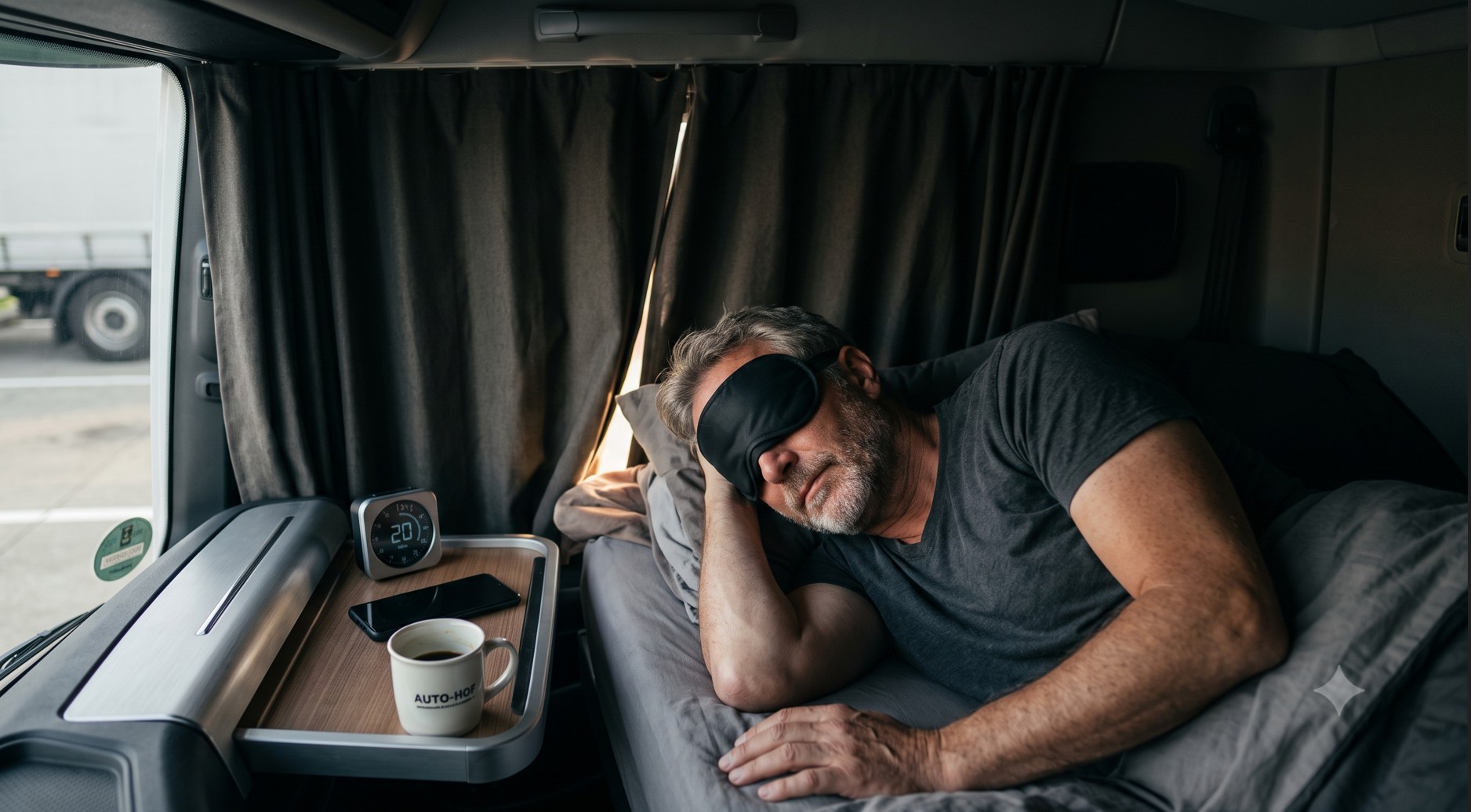
Poor sleep in the cab costs you more than just feeling tired—it slows your reaction time by up to 50%, increases accident risk by four times, and can result in fines up to €3,000 if an inspector determines fatigue contributed to a driving violation. The good news: most sleep problems in the cab come from fixable issues like temperature, light, noise, and timing. Here’s what actually works based on sleep research and what experienced drivers have figured out.
Why Cab Sleep Is Different from Home Sleep
Your body doesn’t naturally want to sleep in a moving environment, even when parked. The brain stays partially alert because it evolved to detect threats. Add in unfamiliar locations, irregular schedules, and a mattress that’s 60-70cm wide instead of a normal bed’s 90-140cm, and you’re fighting biology.
Studies on shift workers and long-haul drivers show that cab sleep typically provides 20-30% less restorative deep sleep than bed sleep at home. You can’t fully eliminate this gap, but you can close it significantly with the right approach.
The EU regulations under EC 561/2006 require a minimum 9 hours of daily rest (reduced from 11 hours, allowed three times between weekly rests). That sounds like enough time, but if you’re only getting 5-6 hours of actual sleep within that window, you’re building a sleep debt that compounds across the week.
Temperature Control: The Most Overlooked Factor
Your body temperature needs to drop by about 1-2°C to initiate deep sleep. In a cab, this is harder than it sounds.
Summer: Cab temperatures can exceed 40°C during the day and stay above 25°C at night in Southern Europe. Running the AC while parked burns roughly 1-1.5 litres of diesel per hour. Some drivers skip it to save fuel, but sleeping in temperatures above 24°C reduces REM sleep by up to 25%.
Better options:
- Auxiliary parking heaters with AC function (Webasto, Eberspächer) use 0.2-0.5 litres per hour
- 12V fans positioned to create airflow across your body, not just face
- Cooling mattress toppers with gel layers (€40-80, worth the investment)
- Park in shade—obvious but often ignored when you’re tired and just want to stop
Winter: The opposite problem. Parking heaters are essential in Scandinavia and Eastern Europe where overnight temperatures hit -20°C or lower. Running the engine to stay warm is illegal in many countries (Sweden fines start at 1,000 SEK/€85) and produces carbon monoxide risk if exhaust is blocked by snow.
Ideal sleeping temperature: 16-19°C. Use a proper sleeping bag rated for the season rather than relying entirely on heating.
Blocking Light and Noise Properly
Light is your sleep’s biggest enemy. Even small amounts of light exposure during sleep reduce melatonin production and fragment sleep cycles. A truck stop at night is full of light sources: other trucks’ marker lights, security lighting, passing traffic.
Light blocking hierarchy (most to least effective):
- Blackout curtains fitted to your specific cab model (€80-150, completely worth it)
- Suction-cup windscreen covers combined with side curtains
- Sleep mask (get one with contoured eye cups, not flat fabric)
For noise, the research is clear: inconsistent noise is worse than consistent noise. A steady 70dB hum from a reefer unit is less disruptive than sporadic 50dB sounds from doors slamming or voices.
Noise solutions that work:
- Foam earplugs (NRR 32-33) block 20-30dB—enough to make most truck stop noise ignorable
- White noise apps on your phone set to 40-50dB mask irregular sounds
- Active noise-cancelling earbuds designed for sleep (Bose Sleepbuds, QuietOn) work but cost €200+
Position matters: park away from the entrance/exit, away from reefer units, and away from the restaurant if possible. The quietest spots at most truck stops are the back corners, though these fill up first. Arriving earlier at quality truck stops in Germany or other busy corridors means better position choices.
Timing Your Sleep Around Your Driving Schedule
Your circadian rhythm—the internal clock controlling sleep—takes about one day to shift by one hour. If you’re constantly changing your sleep schedule by 3-4 hours, your body never fully adjusts.
Practical timing strategies:
| Scenario | Best Approach |
|---|---|
| Regular day driving (06:00-18:00) | Sleep 20:00-05:00, consistent daily |
| Night driving to avoid traffic | Sleep 08:00-16:00, blackout curtains essential |
| Split schedules | Main sleep block 5-6 hours + 2-3 hour nap, same times daily |
| Crossing time zones (UK to Poland) | Shift sleep 30 minutes per day, not all at once |
The 45-minute weekly rest requirement can actually help reset your schedule if used strategically. Plan your weekly rest at the end of a route when you can sleep at a consistent time for two nights.
If you’re struggling to stay alert during your driving hours, the problem almost always traces back to sleep quality rather than not enough coffee.
Your Cab Setup: Mattress, Bedding, and Position
The standard factory mattress in most cabs is 5-8cm of cheap foam. After a year of use, it’s compressed and offers almost no support. This directly contributes to back pain that makes sleep harder.
Mattress upgrades worth considering:
- Memory foam topper (7-10cm) – €60-120, significant improvement
- Custom-cut mattress for your cab dimensions – €150-300
- High-density foam base + memory foam top layer – best option, €200-350
Sleeping position affects both comfort and breathing. Sleeping on your back in a semi-reclined position (like in the driver’s seat) restricts airways and increases snoring and sleep apnea symptoms. A flat surface with a proper pillow that keeps your neck neutral is the goal.
Pillow height guide:
- Side sleeper: 10-15cm pillow height
- Back sleeper: 8-10cm pillow height
- Stomach sleeper: thin pillow or none (but this position isn’t great for your back)
Your bedding should be easy to wash. Truck stops with laundry facilities exist, but you won’t use them if it’s inconvenient. Two sets of sheets you can rotate make this practical.
What You Eat and Drink Before Sleep
Eating a large meal within 2-3 hours of sleep forces your digestive system to work when it should be slowing down. This raises body temperature and disrupts sleep cycles.
Foods that help sleep:
- Complex carbohydrates (oatmeal, whole grain bread) increase tryptophan availability
- Turkey, chicken, fish contain tryptophan
- Bananas, cherries, kiwis have natural melatonin
- Small amounts of nuts provide magnesium
What to avoid within 4-6 hours of sleep:
- Caffeine (half-life is 5-6 hours, so afternoon coffee affects night sleep)
- Alcohol (seems to help falling asleep but fragments later sleep cycles)
- High-fat fried foods (slow digestion, acid reflux when lying down)
- Large fluid intake (bathroom trips interrupt sleep)
When you’re choosing food at truck stops, think about when you’re planning to sleep, not just what tastes good right now.
Frequently Asked Questions
Can I take sleeping pills to sleep better in the cab?
Most sleep medications stay in your system for 6-8 hours and can impair driving ability even after you feel awake. Diphenhydramine (common in over-the-counter sleep aids) is specifically flagged in many EU countries as impairing driving. A positive test during an inspection can result in the same penalties as alcohol—licence suspension and fines up to €5,000 in Germany. Natural melatonin (1-3mg) taken 30-60 minutes before sleep has no next-day impairment in most people, but check your specific country’s regulations.
What’s the minimum sleep I can function on safely?
Research shows that below 6 hours of sleep, cognitive impairment equivalent to a 0.05% blood alcohol level begins. Below 4 hours, it’s closer to 0.1%—legally drunk in every EU country. The 9-11 hour daily rest requirement exists specifically because regulators know you need 7-8 hours of actual sleep to drive safely.
How do I handle sleep when I have to take my weekly rest in the cab?
Since 2017, the EU prohibits taking the regular 45-hour weekly rest in the cab (fines vary: France €1,500, Belgium €1,800). However, for the reduced 24-hour weekly rest, cab sleep is still permitted. When you must find proper accommodation, plan ahead—weekend driving bans in many countries mean hotels near truck stops book up. Budget €40-70 per night for a room near a truck stop where you can keep an eye on your vehicle.
Does sleep apnea disqualify me from driving?
Untreated severe sleep apnea can disqualify you, but treated apnea typically doesn’t. CPAP machines have 12V adapters for cab use. If you snore loudly, wake up gasping, or feel exhausted despite getting enough hours of sleep, get tested. Untreated apnea increases accident risk by 2-7 times and many transport companies now require testing for drivers with BMI over 30.
Good sleep on the road requires some investment in equipment and attention to timing, but it pays