

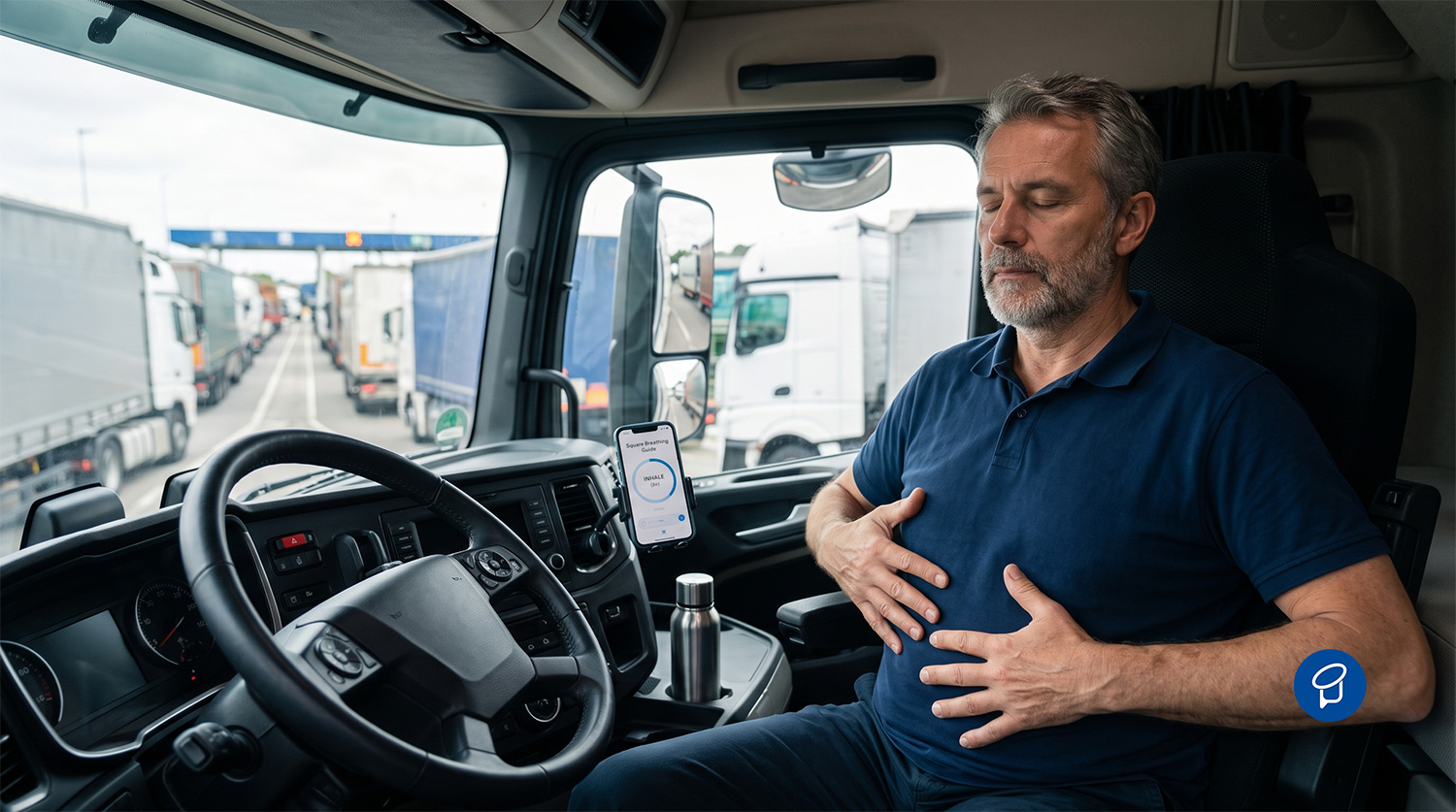
There’s almost nothing more maddening than watching the seconds slip away while the delivery deadline creeps closer, and you’re just sitting there, either still at customs or feeling absolutely stuck in a sea of red brake lights. If you’ve spent long days behind the wheel, you know how a border queue or a random traffic jam can feel like being trapped on a treadmill that’s going nowhere. Losing those kilometers and minutes cranks up the stress for sure. But here’s an important reminder I wish someone had told me sooner: you might not have any say over the traffic, but you can absolutely decide how you handle it inside your cab. Taking care of your health, surprisingly enough, starts right where you’re sitting.
Why sitting in traffic triggers physical stress
You wouldn’t think that just sitting could feel so dramatic, but your body doesn’t always know the difference between a slow-moving traffic jam and real danger. When you’re stuck for ages, your body starts pouring out adrenaline, as if something urgent is about to happen. In most situations, this fight-or-flight response is a life-saver, making you faster or sharper. But trapped in your seat with nowhere to go, that stress just builds up in your bloodstream without any real way out.
The body tries to clear adrenaline pretty quickly, usually in just a short while, unless the wait becomes one of those epic ones where nothing seems to move. In those moments, the stress hormone hangs around, keeping everything on high alert. Suddenly your heart feels like it’s working overtime, your blood pressure ticks upward, and it’s almost like your blood vessels are squeezing down to save space.
Personal experience tells me what research confirms: with enough of these waits, you get completely zapped of energy. That tension simmers in the background, leaving you wiped out long before you ever put the truck in gear again. By the end of a tough week, even simple tasks feel exhausting. Here’s a quick look at what’s going on inside your body:
| Physical reaction | Effect on your body during long waits |
|---|---|
| Heart rate | Beats faster and pumps harder |
| Blood pressure | Rises significantly |
| Blood vessels | Narrow, restricting normal blood flow |
| Energy levels | Drains stores, causing severe tiredness |
It doesn’t take long to realize: you can’t fight the traffic, but you can stop letting it wreck your health.
In-cabin exercises you can do behind the wheel
Honestly, there’s more you can do during those waits than people usually imagine. Stretching and moving right in your seat is a surprisingly effective way to let off some of that pent-up tension. Even if you look a bit odd to someone glancing over, who cares? These little in-cabin exercises might make the biggest difference by the end of your shift.
Breathing techniques to calm your mind
First things first, when work gets tense, nothing grounds you quite like a good breathing exercise. Box Breathing is a favorite among drivers because you can do it whenever you want, even with both hands on the wheel. Just slowly breathe in for four seconds, gently hold for four, exhale over four seconds, and finish with another hold for four. It sounds simple, but it really works to slow things down inside, even if the world outside isn’t moving.
Safe upper body movements
Sometimes, what you really need is to release those tight muscles. The aptly named Steering Wheel Squeeze is a fantastic go-to move. Squeeze the wheel as hard as you comfortably can for about five seconds, let it go, and after a short break try it again a few more times. There’s something oddly satisfying about it, too.
Or maybe just let your shoulders relax for a second. Drop them down and picture all that tension melting off your neck and upper back. These small steps might not sound life-changing, but stacked up, they absolutely help stop the post-queue aches and pains.
Movements requiring extra caution
If you’ve got a stubborn crick in your neck, Neck Rolls can be a lifesaver, but only if you’re 100% stopped with the handbrake pulled. Turning your head or rolling your shoulders is risky business if the traffic starts creeping forward unexpectedly. The number one rule? Stay ready to drive at all times and only give yourself a deeper stretch when there’s zero chance of movement.
How to stop ‘anxiety snacking’ when bored
Let’s face it: when the wait drags on, it’s so tempting to reach for another bag of crisps or something sugary just to pass the time. That kind of anxiety snacking is actually your brain’s way of coping with stress. Thanks to cortisol, your body suddenly wants fast energy, even if you’re not truly hungry. Sweets and junk food can give you a quick hit of relief, but before long you’re craving more, and it’s easy to spiral.
Three quick rules for healthy waiting
If you want to escape that trap (and trust me, it’s worth it), there are a few simple practices I’d absolutely recommend to anyone:
- Drink water first: Whenever you’re not sure if you’re really hungry or just bored, have a quick glass of water. Half the time you’ll find the urge goes away, which means you just needed a little hydration.
- Keep healthy nuts in reach: Swapping sweets for unsalted nuts or seeds is a genuine game-changer. You get slow-release energy and steady blood sugar, which keeps those cravings under control and stops you from crashing.
- Keep sugary snacks out of the dashboard area: If treats are hard to grab, you’re much less likely to eat them without thinking. Just moving them out of sight makes a huge difference, even if it feels surprisingly simple.
Making these swaps can really help your energy last longer on difficult days.
Frequently asked questions (FAQ)
Can deep breathing really lower my blood pressure in a traffic jam?
Actually, yes! Deep breathing isn’t just some wellness trend; it really does tell your nervous system to relax even when the world around you is stressful. Slow, controlled breathing helps the heart slow down and works to relax your blood vessels. Some drivers have found a regular breathing practice can drop blood pressure by as much as 5 to 15 mmHg, all while still sitting at the wheel.
What should I eat when I feel bored or stressed at a border crossing?
Eat foods that offer reliable, long-lasting energy and help keep your spirits even. Great options you might want to keep on hand include:
- Fresh fruit, like bananas and berries
- Unsalted nuts such as almonds or walnuts
- Whole grains, for instance wholewheat bread or oats
- Crunchy vegetables like carrots or cherry tomatoes
I’d strongly suggest steering clear of heavily processed, sugary, or super-caffeinated snacks. They just add to your stress eventually.
How do I stop getting angry at border staff or other drivers?
There’s no magic way to avoid frustration completely, but you can definitely manage anger better. My go-to approach goes something like this: first, notice and admit that you’re angry, no need to blame yourself. Then, take a couple of deep breaths through your nose and slowly breathe out through your mouth. Finally, try letting your mind wander somewhere peaceful, or turn on calming music for a few minutes. It won’t fix the wait, but it really helps your brain recharge.
Is it safe to do isometric exercises while driving slowly in a queue?
Good question! Isometric moves, like squeezing the steering wheel, should only be done when your truck is at a complete stop, it’s never worth the risk if your hands might be needed in a split second. Even creeping forward in a queue demands full focus on the road. Your safety always comes first, no matter how bored you feel!
Truthfully, the strain of long waits and marathon driving can quietly wear you down. By intentionally breaking up the stress with easy breathing, a few careful stretches, and making better food choices, you’re not just surviving bad traffic, you’re protecting your heart and extending your energy for the long haul.
Above all, remember: your health comes before every delivery. If you ever feel things like chest pain, dizziness, or any unusual warning signs, pull over safely and get help straight away. Traffic can always wait, but your well-being never should.